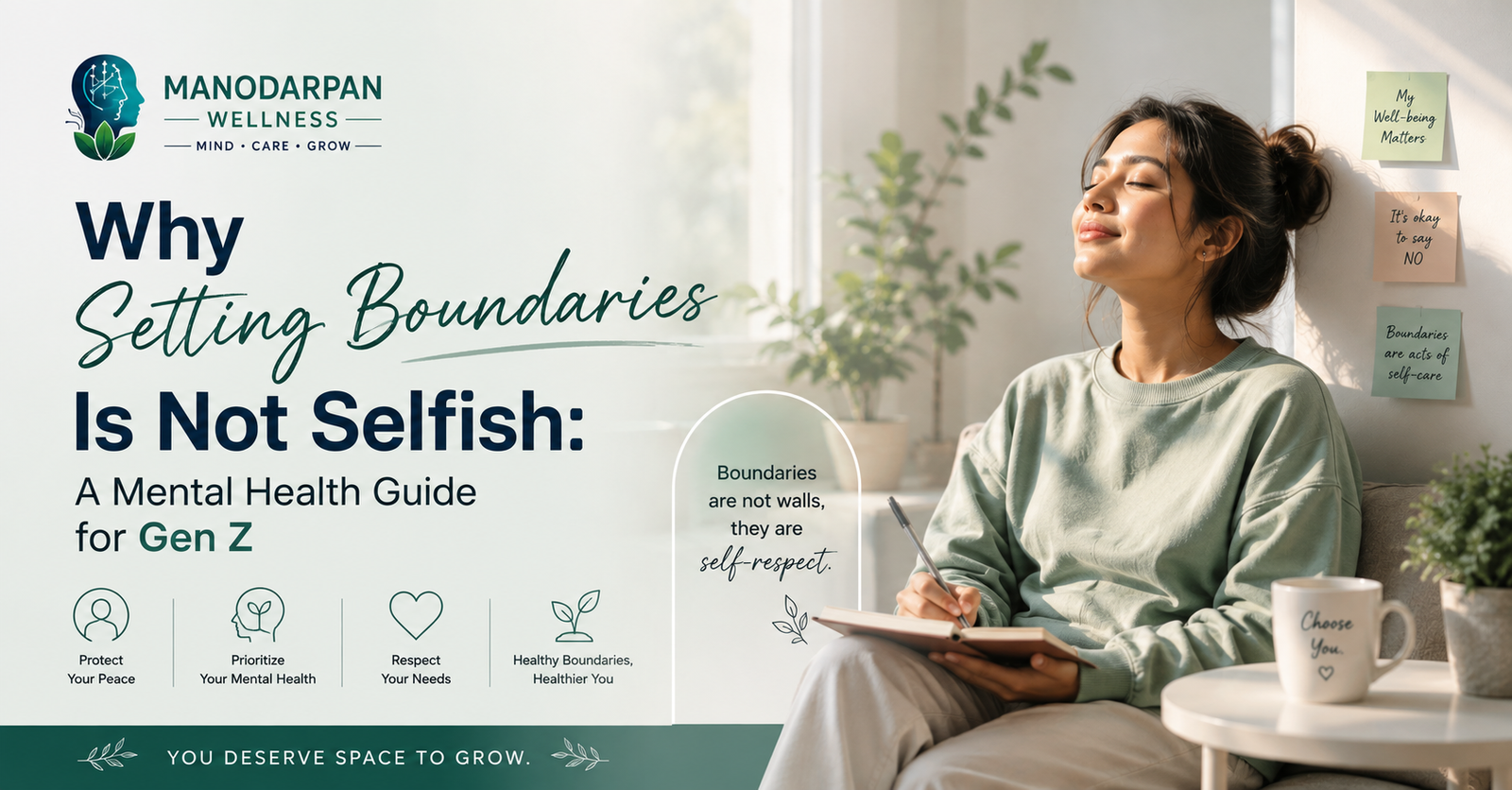
Why Setting Boundaries Is Not Selfish: A Mental Health Guide for Gen Z
- 28 Jul 2026
- setting boundaries, healthy boundaries, mental hea...
We live in a world where everyone expects us to be available.
Reply instantly. Stay active. Attend every event. Help everyone. Be productive all the time.
For many young people, saying "no" feels uncomfortable because they're afraid of disappointing others. But constantly putting everyone else's needs before your own can leave you emotionally exhausted.
The truth is simple:
Setting boundaries isn't rude. It's a form of self-care.
What Are Healthy Boundaries?
Boundaries are personal limits that protect your emotional, mental, and physical well-being.
They help you decide:
- How much time you can give others.
- What behavior you will accept.
- When you need rest.
- Who has access to your emotional energy.
Healthy boundaries allow relationships to grow with mutual respect instead of guilt or pressure.
Signs Your Boundaries Need Attention
If you often experience these situations, your boundaries may need strengthening:
- You feel guilty whenever you say no.
- You constantly put others before yourself.
- You feel emotionally drained after conversations.
- People expect you to be available 24/7.
- You avoid expressing your true feelings to prevent conflict.
- You feel responsible for solving everyone else's problems.
These patterns can slowly increase stress, anxiety, and emotional burnout.
Why Gen Z Finds It Difficult
Many Gen Z individuals grew up with constant digital connectivity.
Social media has created pressure to always respond, stay updated, and remain available.
This often leads to:
- Fear of missing out (FOMO)
- People-pleasing habits
- Difficulty disconnecting
- Emotional exhaustion
- Reduced personal time
Remember:
Being kind doesn't mean sacrificing your peace.
Simple Ways to Build Healthy Boundaries
1. Practice Saying No
A respectful "No, I can't today" is enough.
You don't need a long explanation.
2. Protect Your Personal Time
Your rest is productive.
Take breaks without feeling guilty.
3. Limit Digital Overload
Mute unnecessary notifications.
You don't have to reply immediately to every message.
4. Communicate Clearly
Healthy relationships appreciate honest communication.
Express your needs calmly and respectfully.
5. Stop Feeling Responsible for Everyone
Supporting someone is different from carrying their emotional burden.
You deserve support too.
Boundaries Improve Relationships
Many people believe boundaries push others away.
In reality, healthy boundaries create:
- Better communication
- More respect
- Less resentment
- Stronger emotional trust
- Healthier friendships and family relationships
People who respect your boundaries usually respect you as well.
Taking Care of Yourself Is Not Selfish
Your mental health deserves attention just as much as your physical health.
Choosing rest.
Choosing peace.
Choosing emotional safety.
These are not acts of selfishness—they're acts of self-respect.
The healthier you are emotionally, the better you can show up for the people you care about.
Final Thoughts
You don't have to earn rest.
You don't have to be available all the time.
You don't have to carry everyone's expectations.
Healthy boundaries allow you to protect your peace while building stronger, more meaningful relationships.
Remember:
You can be a caring person without saying "yes" to everything.