She Was Doing Fine. Until She Realized She Hadn’t Felt Fine in Months.
- 24 Sep 2026
- mental health, importance of mental health mental...
A story about the kind of mental-health struggle that often goes unnoticed:
I’m Fine.”
That was the answer she had been giving everyone.
Her mother asked her over breakfast.
“Everything okay?”
“I’m fine.”
Her friend called in the evening.
“You sound a little off. Is something wrong?”
“No, yaar. I’m just tired.”
Her colleague noticed that she had become quieter.
“You okay?”
A smile.
“Yeah. Just work.”
Even she had started believing it.
She was fine.
She was waking up every morning.
She was going to work.
She was replying to messages.
She was attending family functions.
She was laughing at Instagram reels.
She was posting pictures.
She was meeting deadlines.
From the outside, there was nothing obviously wrong.
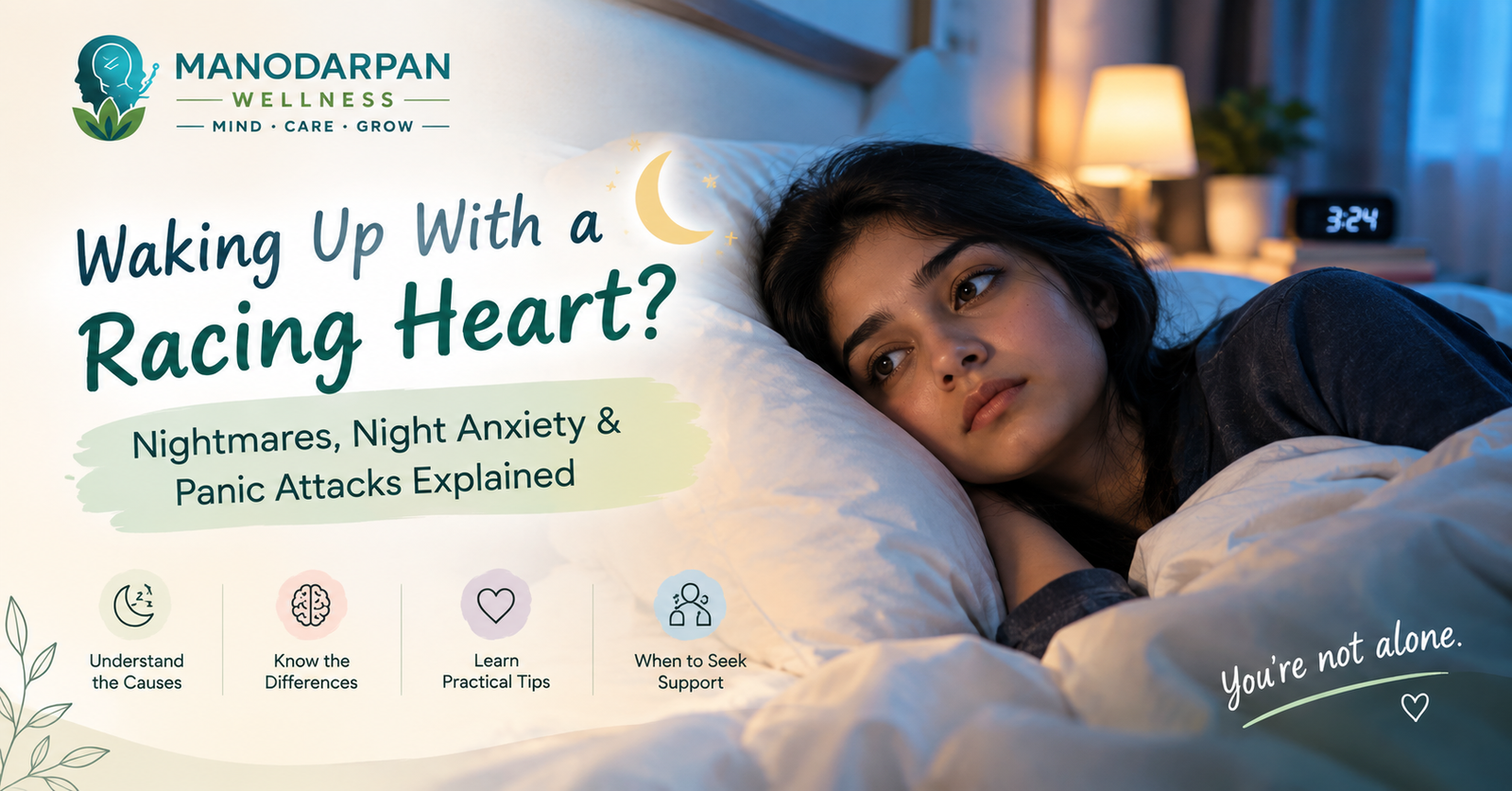
But every night, when the lights went off and her phone was finally silent, something changed.
Her mind became loud.
The Nights Were Different
She would lie in bed and replay conversations from the day.
Did I sound rude?
What if I made a mistake at work?
Why haven't they replied?
What am I actually doing with my life?
Everyone else seems to be moving ahead.
Sometimes she would check the time.
1:17 a.m.
Then again.
2:04 a.m.
Then:
3:26 a.m.
She wasn't necessarily crying.
That was the strange part.
She just couldn't switch her mind off.
Some nights she felt anxious.
Some nights she felt completely empty.
Some nights she was exhausted but couldn't sleep.
And some mornings, she woke up feeling as though she hadn't rested at all.
Still, she told herself:
“Everyone is stressed. It's normal.”
And maybe some stress was normal.
But something had changed.
She wasn't simply having a difficult week anymore.
She was slowly losing interest in things she used to enjoy.
When “Tired” Became a Personality
Her friends started describing her differently.
“She doesn't come out anymore.”
“She is always tired.”
“She takes everything too seriously.”
“She doesn't talk much these days.”
She heard all of it.
But she didn't know how to explain what was happening.
How do you explain that you're tired when you haven't done anything physically exhausting?
How do you explain that you need rest but don't feel rested even after sleeping?
How do you explain that you're surrounded by people but still feel emotionally alone?
So she stopped explaining.
Instead, she became very good at saying:
“I'm okay.”
The Day Something Small Finally Felt Too Big
One afternoon, she made a tiny mistake at work.
Nothing serious.
Nothing that couldn't be fixed in five minutes.
But when her manager pointed it out, she went to the washroom and sat there quietly.
She wasn't crying because of the mistake.
She was crying because the mistake felt like the final drop in a glass that had already been full for months.
And for the first time, she thought:
“Maybe I'm not okay.”
That thought scared her.
Because she had always believed mental-health problems looked obvious.
She thought someone struggling would always look sad.
They wouldn't go to work.
They wouldn't laugh.
They wouldn't make plans.
They wouldn't post pictures.
But she was doing all of those things.
So she wondered:
“Can I really be struggling if I'm still functioning?”
The answer is yes.
Mental-health difficulties do not always look dramatic from the outside.
A person can continue working, studying, socializing and meeting responsibilities while privately struggling with anxiety, low mood, emotional exhaustion or other difficulties.
The World Health Organization describes mental health as a state of well-being that helps people cope with life's stresses, function, learn and work, and participate in their communities. Mental health is therefore much broader than simply whether someone has a diagnosed mental disorder.
So What Was Actually Happening?
She didn't suddenly become “weak.”
She wasn't being lazy.
She wasn't simply being dramatic.
And there wasn't necessarily one single event that caused everything.
It was a combination.
Work pressure.
Uncertainty about the future.
Comparing herself with people online.
Poor sleep.
Overthinking.
Not talking about what she was feeling.
Trying to be available for everyone.
Expecting herself to always perform.
And believing that asking for help meant she wasn't strong enough.
Sometimes mental health is affected not by one enormous event, but by many smaller pressures that accumulate over time.
WHO notes that mental health exists on a continuum and can be influenced by individual, family, community and broader social and structural circumstances.
The Conversation That Changed Something
A few days later, she met an old friend for coffee.
Nothing special.
Just coffee.
Her friend looked at her and asked:
“How are you, actually?”
Not:
“Are you fine?”
Not:
“Everything okay?”
But:
“How are you, actually?”
She laughed.
“I'm fine.”
Her friend didn't argue.
She simply said:
“You don't have to be fine with me.”
And suddenly, she didn't know what to say.
There was a long silence.
Then she said:
“I think I'm tired.”
Her friend asked:
“Physically?”
She shook her head.
“No. I don't know. Just… everything.”
And for the first time in months, she didn't have to pretend.
Sometimes Being Heard Is the Beginning
She eventually decided to speak with a mental-health professional.
Not because someone had diagnosed her with something.
Not because she had reached some imaginary “worst point.”
She simply wanted to understand herself better.
During those conversations, she began noticing patterns she had never paid attention to before.
How often she ignored her own emotions.
How quickly she blamed herself.
How much pressure she put on herself.
How difficult it was for her to say no.
How often she compared her life with what she saw online.
How she treated rest as something she had to earn.
Therapy did not magically make every problem disappear.
There were still stressful days.
There were still nights when she overthought.
There were still moments when she felt overwhelmed.
But now she had somewhere to talk about them.
And, more importantly, she was learning how to respond to herself differently.
Mental Health Is Not Only About Mental Illness
This is something we often forget.
You don't need to have a diagnosed mental disorder to care about your mental health.
Just as we don't wait for a serious physical illness before caring about our physical health, we don't have to wait until emotional distress becomes overwhelming before paying attention to our mental well-being.
Mental health affects how we:
- Handle stress
- Make decisions
- Build relationships
- Work and study
- Sleep
- Communicate
- Manage emotions
- Respond to difficult situations
- Enjoy everyday life
WHO emphasizes that mental health is an integral part of overall health and that effective prevention and treatment options exist for many mental-health conditions.
The Problem Is That We Often Notice Too Late
We notice a fever.
We notice a broken bone.
We notice a persistent physical pain.
But emotional distress can be much easier to hide.
Someone can say:
“I'm okay.”
while struggling internally.
Someone can go to college while feeling completely overwhelmed.
Someone can attend meetings while experiencing severe anxiety.
Someone can laugh with friends while feeling emotionally exhausted.
Someone can take care of everyone else while quietly neglecting themselves.
That's why mental-health conversations matter.
Not because we should assume that every quiet person is struggling.
But because we should make it safe to talk when someone is.
What Can You Do When You Don't Feel Like Yourself?
You don't have to immediately figure out exactly what's wrong.
Start by noticing.
Ask yourself:
Have I been feeling different lately?
Has my sleep changed?
Am I constantly tired or overwhelmed?
Have I lost interest in things I normally enjoy?
Am I overthinking more than usual?
Am I avoiding people because I don't have the emotional energy?
Have I been keeping everything to myself?
These questions aren't a diagnosis.
They're simply an opportunity to check in with yourself.
You Can Start Small
Mental well-being doesn't always require a huge life transformation.
Sometimes the first step is surprisingly simple.
Talk to someone you trust.
You don't have to explain everything perfectly.
You can simply say:
“I've not been feeling like myself lately.”
Create space for rest.
Rest isn't something you should only get after you've exhausted yourself.
Pay attention to your sleep.
Sleep and mental well-being are closely connected, so persistent sleep difficulties deserve attention rather than being dismissed.
Step away from constant comparison.
What you see online is only a small part of someone's life.
Give yourself permission to ask for professional support.
You don't need to wait until everything falls apart.
And What If Someone You Love Is Struggling?
You don't need to become their therapist.
You don't need to have the perfect advice.
Sometimes you can simply be present.
Instead of saying:
“Don't overthink.”
Try:
“Do you want to talk about what's been bothering you?”
Instead of:
“Everyone has problems.”
Try:
“I can see that this has been difficult for you.”
Instead of immediately giving solutions:
Listen.
A supportive conversation cannot replace professional care when that is needed, but it can make it easier for someone to take the next step.
WHO's public mental-well-being guidance similarly encourages people experiencing mental distress to talk to someone they trust and seek professional help when needed.
The Most Important Thing She Learned
Months later, she still had difficult days.
But she no longer considered every difficult day a personal failure.
She learned that being tired didn't always mean she needed to “try harder.”
That asking for help wasn't an admission of weakness.
That taking care of her mind wasn't selfish.
And that mental health wasn't something she needed to think about only when there was a crisis.
It was part of her everyday health.
Just like sleep.
Just like nutrition.
Just like physical activity.
Just like regular medical care.
Maybe You Know Someone Like Her
Maybe it's your friend.
Maybe it's your sibling.
Maybe it's your partner.
Maybe it's the person sitting beside you in college.
Maybe it's your colleague.
Or maybe…
it's you.
The person who keeps saying:
“I'm fine.”
The person who keeps postponing rest.
The person who keeps telling themselves:
“I'll deal with it later.”
If something has been weighing on your mind for weeks or months, you don't have to wait until you reach a breaking point to take it seriously.
You are allowed to ask:
“Why am I feeling this way?”
You are allowed to talk.
You are allowed to rest.
You are allowed to seek support.
And you are allowed to take your mental health seriously.
Mental Health Deserves the Same Attention as Physical Health
Mental health isn't a trend.
It isn't just a social-media topic.
It isn't something that matters only when life becomes unbearable.
It is part of being human.
The WHO's latest global reporting says more than one billion people live with mental-health conditions, while significant gaps remain in access to care. WHO also notes that anxiety and depressive disorders are among the most common mental disorders.
That is why conversations about mental health matter.
Not to label everyone.
Not to diagnose ourselves through Google.
Not to turn every difficult emotion into a disorder.
But to create a culture where people can say:
“I'm struggling.”
…and instead of being judged, they are heard.
A Final Thought
Maybe mental health care doesn't always begin with a dramatic moment.
Maybe sometimes it begins with a small sentence:
“I'm not feeling like myself lately.”
Maybe it begins with a friend asking:
“How are you, really?”
Maybe it begins with finally admitting:
“I think I need some help.”
Whatever that first step looks like, it matters.
Because taking care of your mind isn't waiting for something to go wrong.
It's taking care of the person you have to live with every single day — yourself.
Manodarpan Wellness
Mind. Care. Grow. 🌿