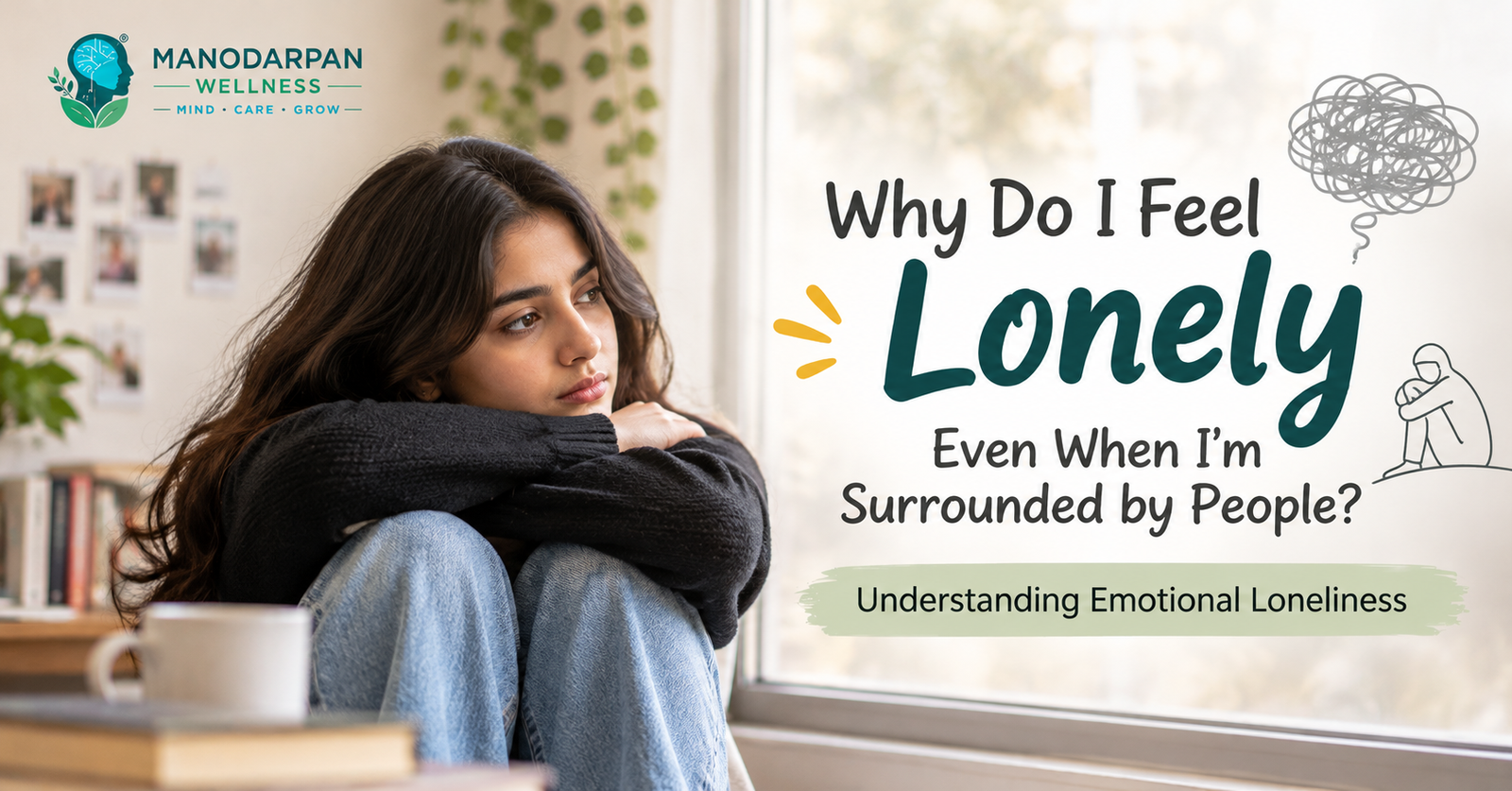
Why Do I Feel Lonely Even When I'm Surrounded by People? Understanding Emotional Loneliness
- 16 Nov 2026
- emotional loneliness, why do I feel lonely, feelin...
Have you ever been surrounded by friends, family, or colleagues and still felt like something was missing?
You laugh during conversations, reply to messages, attend social gatherings, and stay connected with people online. Yet, when you are alone with your thoughts, you experience a feeling that is difficult to explain.
You may wonder why you feel disconnected when you are not actually alone.
This experience is often described as emotional loneliness.
In today's digitally connected world, having people around us does not always mean feeling emotionally understood. We may have hundreds of contacts, regular conversations, and active social lives but still struggle to find someone with whom we can share our deepest thoughts.
Loneliness is not simply about being alone. It can also be about feeling unseen, unheard, or disconnected.
Let's understand why this happens, how it can affect mental well-being, and what you can do to build more meaningful connections.
What Is Emotional Loneliness?
Emotional loneliness is the feeling of lacking meaningful emotional connection with others.
It can happen even when you have friends, family members, a partner, or people around you every day.
For example:
You talk to many people but feel nobody truly understands you.
You hesitate to share your problems because you don't want to be judged.
You are always available for others but struggle to find someone when you need support.
You feel disconnected even when spending time with people.
You hide your emotions because you don't want to appear vulnerable.
Emotional loneliness is different for everyone. It does not necessarily mean that you have no relationships. Sometimes, it means that your relationships are not providing the emotional closeness or understanding you need.
Why Do We Feel Lonely Even When We Have People Around Us?
There can be several reasons behind this experience.
1. We Have More Digital Connections but Less Meaningful Communication:
Social media makes it easier than ever to stay connected. We can send messages, share pictures, comment on posts, and interact with people throughout the day.
But digital interaction does not always provide emotional closeness.
You might know what someone had for dinner, where they travelled, or what they achieved, but have no idea how they are actually feeling.
A 2026 report examining digitally connected young Indians explored how people navigate friendships, relationships, family, and emotional support. It found that 51% of respondents defined real friendship through non-judgmental sharing. This highlights the importance of feeling safe enough to communicate honestly.
2. We Are Afraid of Being Judged:
Sometimes, we keep our feelings to ourselves because we worry about how others might react.
Thoughts such as these may come up:
What if they think I am overreacting?
What if they don't understand?
What if they share my personal problems with someone else?
What if I become a burden?
Over time, hiding emotions can make it harder to develop deeper connections.
Remember, expressing your feelings does not make you weak. Everyone needs a space where they can speak without constantly worrying about being judged.
3. We Expect Others to Understand Without Explaining:
We sometimes expect friends, partners, or family members to recognise when something is wrong.
When they do not notice, we may feel disappointed or misunderstood.
But people cannot always understand what we are experiencing unless we communicate it.
Instead of waiting for someone to guess, try expressing your needs clearly.
For example, you could say, "I've been feeling a little low lately. I don't need advice right now; I just want someone to listen."
4. We Compare Our Relationships With What We See Online:
Social media often shows the happiest moments of people's lives.
We see pictures of close friendships, romantic surprises, family celebrations, and group outings. Without realising it, we may begin comparing our relationships with these carefully selected moments.
This can create the impression that everyone else has a stronger support system or a more fulfilling social life.
But online content rarely shows the complete picture.
A healthy relationship is not defined by how perfect it looks online. It is defined by mutual respect, understanding, trust, and emotional support.
5. We Are Always There for Others but Forget Our Own Needs:
Some people naturally become the listener, problem-solver, or emotional support system in their relationships.
They remember birthdays, check on friends, listen to problems, and offer encouragement.
But when they experience difficulties, they may find it uncomfortable to ask for the same support.
Being supportive is valuable, but your emotional needs matter too.
Healthy relationships allow both people to give and receive care.
6. We Struggle to Be Vulnerable:
Being vulnerable means allowing someone to see your genuine thoughts and feelings, even when they are difficult to express.
It may feel safer to say "I'm fine" than to explain that you are struggling.
However, meaningful connections often develop when people feel comfortable sharing more than everyday conversations.
You do not need to share everything with everyone. Start with someone you trust and open up at a pace that feels comfortable.
How Does Loneliness Affect Mental Health?
Experiencing loneliness occasionally is a normal part of life. However, persistent loneliness can affect emotional well-being and may be associated with several difficulties.
Increased Stress and Anxiety:
When you feel unsupported or disconnected, everyday challenges may seem harder to manage.
You may spend more time worrying about relationships, replaying conversations, or questioning whether people genuinely care about you.
Low Mood and Emotional Distess:
Feeling disconnected for a long time may contribute to sadness, hopelessness, or a reduced sense of belonging.
If these feelings persist, it is worth speaking with a qualified mental-health professional.
Lower Self-Esteem:
You may begin questioning your importance in other people's lives.
Thoughts such as "Nobody wants to talk to me" or "Maybe I am not interesting enough" can affect the way you see yourself.
Remember, feeling lonely does not mean you are unworthy of love, friendship, or connection.
Difficulty Trusting Others:
If you have experienced rejection, disappointment, or unhealthy relationships, you may find it difficult to trust people again.
This can make it harder to build new connections, even when opportunities for meaningful relationships are available.
7 Practical Ways to Overcome Emotional Loneliness
You do not need to transform your social life overnight. Building meaningful connections often begins with small, consistent steps.
1. Start With an Honest Conversation:
Choose someone you feel comfortable with and share how you have been feeling.
You do not need to explain everything perfectly. Even saying, "I've been feeling a little disconnected lately," can open the door to a meaningful conversation.
2. Focus on Quality, Not Quantity:
Having a large social circle does not necessarily mean having meaningful relationships.
Instead of focusing on the number of people you interact with, pay attention to the relationships where you feel respected, understood, and comfortable being yourself.
3. Spend Time Away From Social Media:
If scrolling through other people's lives makes you feel disconnected or inadequate, consider taking short breaks.
Use that time to engage in activities that help you feel present, such as walking, reading, painting, cooking, or spending time with someone you trust.
4. Join Activities That Match Your Interests:
Shared activities can create natural opportunities for connection.
Consider joining a book club, sports group, volunteering activity, creative workshop, or community event.
You do not have to become close to everyone immediately. Sometimes, simply showing up regularly is a good starting point.
5. Learn to Express Your Emotional Needs:
Healthy communication involves explaining what you need rather than expecting others to guess.
You can say:
"I would really appreciate someone listening right now."
"Can we spend some time together?"
"I've had a difficult week and could use some support."
"I don't feel ready to discuss this yet, but I appreciate you checking in.
6. Build a Kinder Relationship With Yourself:
Being comfortable with yourself does not mean you must never need other people.
It means learning to recognise your emotions, respect your needs, and treat yourself with compassion.
Try journalling, mindful activities, spending time outdoors, or making room for hobbies that bring you enjoyment.
If loneliness is persistent, overwhelming, or affecting your daily life, talking to a psychologist may help you explore your emotional experiences and relationship patterns.
Professional support can provide a structured, non-judgmental space to understand your feelings and develop healthier ways of connecting with others.
How Can You Support Someone Who Feels Lonely?
Sometimes, someone close to you may be experiencing loneliness without openly expressing it.
You can make a difference through small acts of understanding.
Listen without immediately giving advice. Sometimes people want to feel heard rather than receive solutions.
Check in regularly. A simple message asking how someone is doing can make them feel remembered.
Avoid dismissing their feelings. Statements such as "You have so many friends, how can you be lonely?" may make someone feel misunderstood.
Invite them without pressure. Offer opportunities to spend time together while respecting their boundaries.
Encourage professional support when needed. If their distress continues or affects everyday functioning, gently encourage them to speak with a qualified professional.
You do not have to solve another person's loneliness. Being present, respectful, and supportive can still matter.
When Should You Seek Professional Help?
Consider speaking with a mental-health professional if:
You frequently feel disconnected, even around people you care about.
Loneliness is affecting your sleep, concentration, or daily routine.
You have been experiencing persistent sadness or anxiety.
You find it increasingly difficult to trust or communicate with others.
You have lost interest in activities you previously enjoyed.
You feel emotionally overwhelmed and struggle to manage your feelings.
You do not need to wait until loneliness becomes unbearable before seeking support.
If you are experiencing thoughts of self-harm or feel unable to keep yourself safe, seek urgent help from a trusted person or local emergency service.
Frequently Asked Questions (FAQs)
1. Why do I feel lonely even when I have friends?
Having friends does not automatically guarantee emotional closeness. You may have regular conversations but still feel that you cannot share your genuine thoughts or feelings. Meaningful connection involves trust, understanding, and emotional availability.
2. Is emotional loneliness different from being alone?
Yes. Being alone describes a situation in which you are physically by yourself. Emotional loneliness describes the feeling of lacking meaningful connection. You can experience emotional loneliness even in a crowded room.
3. Can social media make loneliness worse?
Social media can help people connect, but certain patterns of use, such as constant comparison or passive scrolling, may contribute to feelings of disconnection for some individuals. The effect depends on how people use digital platforms and their personal circumstances.
4. How can I stop feeling emotionally disconnected?
Start by recognising your emotional needs, communicating honestly with someone you trust, engaging in shared activities, and creating opportunities for meaningful interaction. If the feeling persists, consider professional support.
5. Can therapy help with loneliness?
A psychologist can help you explore emotional experiences, relationship patterns, communication difficulties, and possible factors contributing to loneliness. They can also help you develop strategies for building healthier connections.
Final Thoughts: You Can Be Surrounded by People and Still Need to Feel Understood
Sometimes, what we need is not another conversation, another notification, or another social gathering.
We need a connection where we can be ourselves without pretending that everything is fine.
We need people who listen, relationships where we feel respected, and spaces where expressing emotions does not feel uncomfortable.
If you have been feeling lonely, remember that your experience is valid. You are not difficult to understand, and you do not have to hide your feelings to maintain relationships.
At Manodarpan Wellness, we believe that emotional well-being begins with understanding yourself, recognising your needs, and knowing that seeking support is okay.
You deserve meaningful connections, emotional support, and a space where your feelings matter.
You are not alone in feeling lonely, and you do not have to navigate it alone.
Manodarpan Wellness — Mind. Care. Grow.