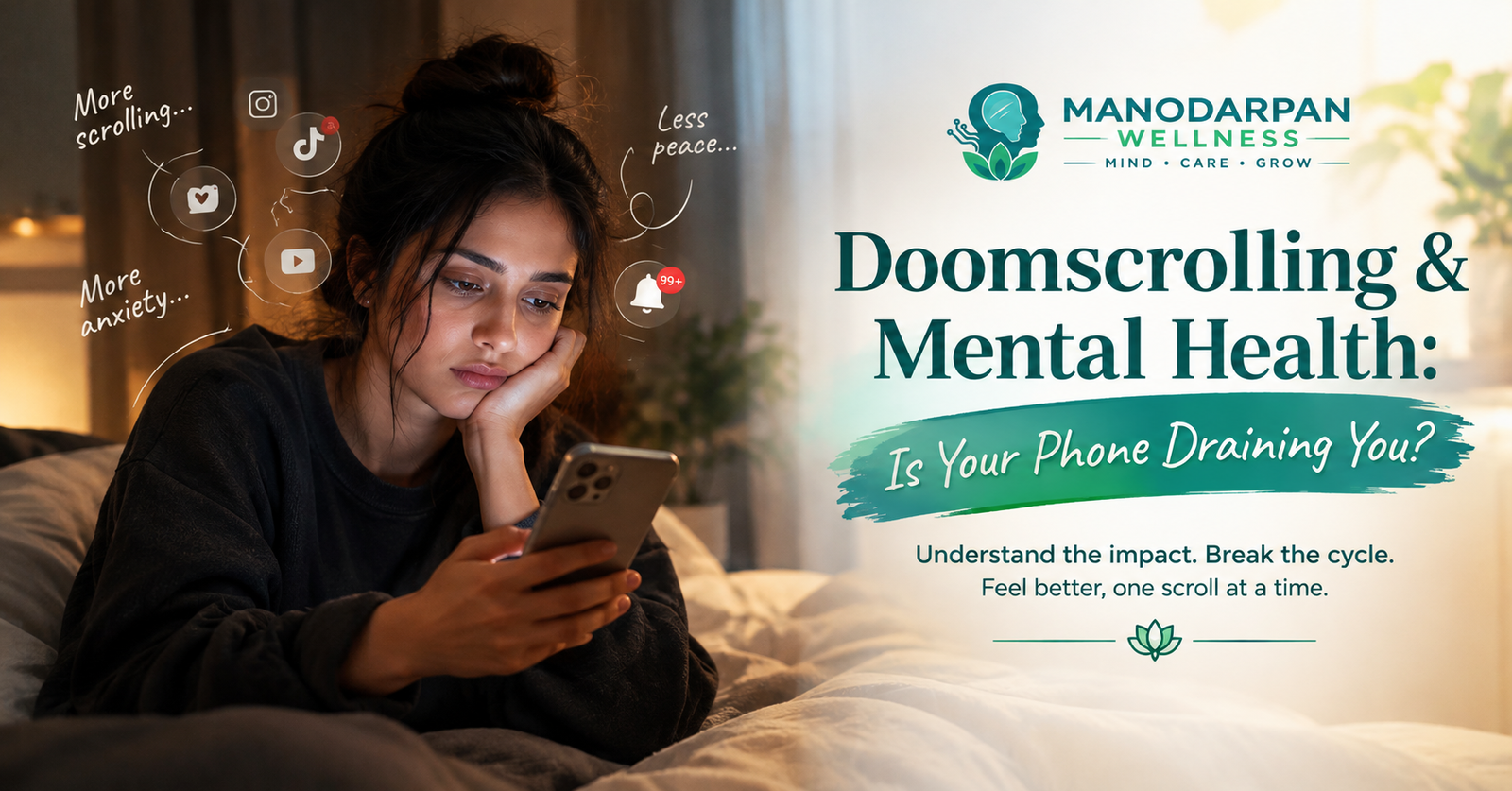
When Your Mind Feels Tired All the Time: Understanding Mental Exhaustion in Gen Z
- 02 Sep 2026
- mental exhaustion in Gen Z, mental fatigue, mental...
It’s not always laziness or lack of motivation. Sometimes, your mind simply needs a pause.
You wake up tired even after sleeping. You open your laptop but cannot focus. You have things to do, messages to reply to, assignments or work waiting, but somehow even small tasks feel overwhelming.
You may think, “Why am I being so lazy?” or “Why can’t I just get things done?”
Sometimes, what looks like laziness may actually be mental exhaustion.
Mental exhaustion can happen when your mind has been dealing with continuous stress, pressure, overthinking, emotional demands, or too much information without enough time to properly rest and recover. For Gen Z, life can feel especially “always on”—social media, studies, work, relationships, notifications and constant comparison can make it difficult to mentally switch off.
What Is Mental Exhaustion?
Mental exhaustion is a state in which you feel emotionally and mentally drained after prolonged stress or mental demands.
It is different from simply having a busy day.
After a busy day, you may feel tired but recover after some rest. With mental exhaustion, the feeling can continue and start affecting your focus, motivation, mood, sleep and everyday functioning.
You might notice:
- Difficulty concentrating
- Feeling overwhelmed by simple tasks
- Constant overthinking
- Low motivation
- Irritability or emotional sensitivity
- Feeling mentally “blank”
- Trouble making decisions
- Wanting to withdraw from people
- Feeling tired even when you have not done much physically
These signs do not automatically mean that someone has a mental health disorder. But when they persist or begin interfering with daily life, they deserve attention.
Why Does Gen Z Feel Mentally Exhausted?
1. The Pressure to Keep Up
There can be pressure to perform well academically, build a career, maintain relationships, stay productive and somehow have your life figured out at the same time.
Social media can make this pressure stronger because you constantly see other people's achievements, lifestyles and milestones.
But remember: you are comparing your everyday life with someone else's selected moments.
2. Being Connected All the Time
Your phone may never really be “off.”
Notifications, reels, messages, emails and endless scrolling can keep your attention constantly moving from one thing to another.
Research on young people's digital lives shows that technology can have both positive and negative effects. What matters is not simply whether someone uses social media, but how they use it, what they experience online and how it fits into their overall life.
3. Overthinking After the Day Is Over
Sometimes the body is resting, but the mind is still working.
You may replay conversations, worry about the future, think about mistakes or create different “what if” situations in your head.
This can make it difficult to feel mentally rested.
4. The Pressure to Always Be Productive
There is nothing wrong with wanting to achieve your goals.
But constantly believing that you must be productive can make rest feel like something you need to “earn.”
Rest is not a reward for being productive. Rest is part of taking care of yourself.
Mental Exhaustion vs. Normal Tiredness
Not every tired day means mental exhaustion.
| Normal tiredness | Mental exhaustion |
|---|---|
| Often improves with rest | May continue despite resting |
| Usually linked to physical activity or a busy day | Can be linked to prolonged stress or emotional demands |
| Motivation generally returns | Motivation may remain low |
| Temporary | Can become persistent |
| Usually doesn't strongly affect daily functioning | May affect work, studies, relationships and routine |
This isn't a diagnostic test. If you are unsure about what you're experiencing, speaking with a qualified mental health professional can help you understand it better.
What Can You Do When Your Mind Feels Overloaded?
Take a Real Break
A break does not always mean switching from work to scrolling.
Try stepping away from your screen, taking a short walk, sitting quietly, listening to music or simply doing nothing for a few minutes.
Reduce Mental Noise
You don't have to respond to every notification immediately.
Try creating small periods during the day when your phone is away and your attention is focused on one thing.
Write Down What Is On Your Mind
If your thoughts feel scattered, write them down.
You can divide them into:
“What I can control”
and
“What I cannot control right now.”
This simple exercise can make an overwhelming situation feel more manageable.
Protect Your Sleep
Late-night scrolling, irregular sleep and constantly checking your phone can make it harder to properly switch off.
The American Psychological Association recommends that adolescent social media use should not interfere with sleep or physical activity.
Stop Expecting Yourself to Be Perfect
You don't need to have everything figured out at 20.
You are allowed to learn slowly, change your plans, make mistakes and take breaks.
When Should You Consider Professional Support?
Feeling mentally tired occasionally is normal.
However, consider talking to a mental health professional if feelings of exhaustion, sadness, anxiety, low motivation or difficulty functioning persist or begin interfering with your studies, work, relationships, sleep or everyday life.
Mental health support isn't only for moments of crisis. Sometimes, talking to someone early can help you understand what you're experiencing before it becomes more difficult to manage.
WHO notes that adolescence is an important developmental period and that addressing mental health concerns early can support well-being into adulthood.
You Don't Have to Be “Strong” All the Time
Sometimes, the most responsible thing you can do for yourself is admit:
“I'm tired.”
Not physically tired.
Not lazy.
Not incapable.
Just mentally tired.
And that's okay.
You don't have to solve everything in one day. Start with one small step—sleep, a conversation, a break, writing your thoughts down or reaching out for professional support.
Your mind deserves the same care you give everything else.
At Manodarpan Wellness, professional mental health support is available through online consultations, providing a safe space to talk, understand your concerns and work towards better mental well-being.
Mind. Care. Grow.