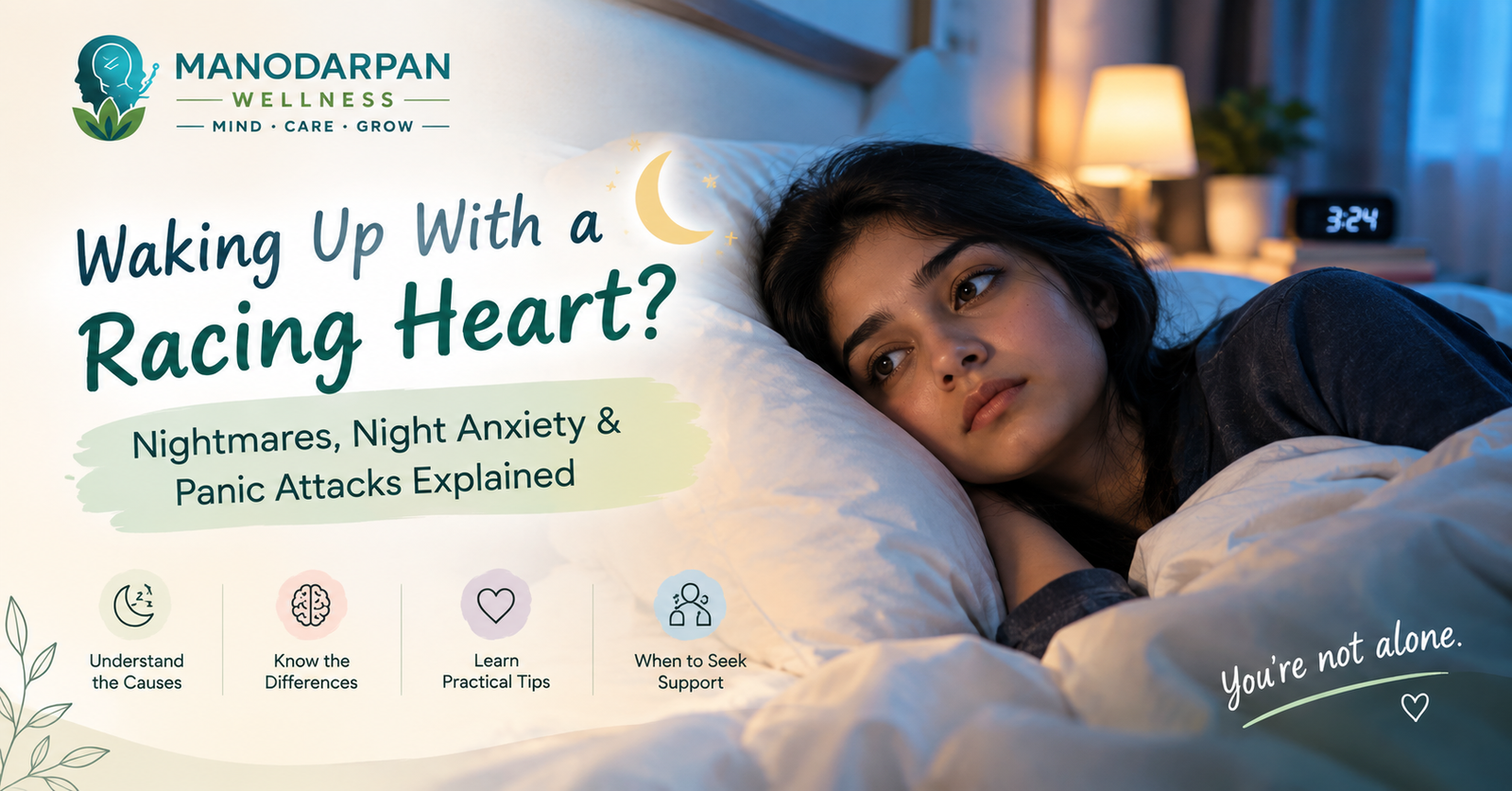
Waking Up With a Racing Heart? Nightmares, Night Anxiety & Panic Attacks Explained
- 21 Sep 2026
- panic attacks at night, night anxiety, nocturnal p...
Have you ever fallen asleep feeling completely fine, only to suddenly wake up with your heart racing, your body sweating, your breathing feeling different, or a strange sense of fear?
Or maybe you wake up from a vivid nightmare and spend the next few minutes wondering, “Why did I dream that?”
These experiences can be unsettling, especially when they happen repeatedly. But a frightening night-time experience does not automatically mean that something is seriously wrong with you. Nightmares, anxiety, sleep disruption and nocturnal panic attacks can have different causes, and understanding the difference can make the experience feel less confusing.
Why Do I Wake Up Feeling Scared at Night?
There isn't one single answer.
Night-time fear can be connected with stress, anxiety, disrupted sleep, frightening dreams, past experiences, sleep problems or panic symptoms. Sometimes several factors overlap.
For example, someone going through a stressful period may spend the entire day trying to stay productive and “keep it together.” When everything becomes quiet at night, thoughts that were pushed aside during the day may become much more noticeable.
This doesn't mean that your mind is “creating problems.” It can simply mean that your body and mind are responding to stress in different ways.
Nightmare vs Panic Attack: Are They the Same?
No. A nightmare and a panic attack are different experiences.
A nightmare is a frightening or upsetting dream that usually wakes you up. You may remember the dream clearly and feel scared, sad, angry or anxious after waking. Nightmares can also cause a pounding heart or sweating.
A nocturnal panic attack, on the other hand, is a sudden episode of intense fear that wakes you from sleep. You may wake up with a racing heart, sweating, trembling, chest discomfort, shortness of breath, dizziness or a strong feeling that something is terribly wrong.
A simple way to remember it:
Nightmare:
“I woke up because of a frightening dream.”
Nocturnal panic attack:
“I woke up suddenly feeling intense fear, sometimes without remembering any dream.”
Of course, not every night-time episode fits neatly into one category. If these experiences keep happening, a healthcare professional can help you understand what's going on.
What Does a Night-Time Panic Attack Feel Like?
A nocturnal panic attack can feel extremely physical.
Some people experience:
- Racing heartbeat
- Sweating
- Trembling or shaking
- Shortness of breath
- Feeling unable to catch their breath
- Chest discomfort
- Chills or hot sensations
- Dizziness
- Tingling or numbness
- Nausea
- A sudden feeling of intense fear
Panic attacks can come on quickly and may feel frightening. NHS guidance notes that many panic attacks last around 5–20 minutes, although experiences can vary.
Because symptoms such as chest pain, breathing difficulty or a racing heartbeat can also occur with physical health conditions, it is important not to automatically assume that every episode is anxiety. If you're concerned about new, severe or unusual physical symptoms, seek appropriate medical evaluation.
Why Do Nightmares Happen?
Having an occasional nightmare is common and does not necessarily indicate a mental-health disorder.
Nightmares can be associated with several factors, including:
1. Stress and Anxiety
Periods of emotional pressure can affect sleep and may be associated with more disturbing dreams.
2. Difficult or Traumatic Experiences
Nightmares can occur after traumatic experiences and are also associated with PTSD.
3. Poor or Irregular Sleep
Not getting enough sleep or having changes in your normal sleep schedule can increase the likelihood of nightmares.
4. Frightening Content Before Bed
For some people, disturbing movies, social-media content, news or other upsetting material before sleep may contribute to unpleasant dreams.
5. Certain Medicines or Substances
Some medicines and substance use or withdrawal can be associated with nightmares, so medication-related changes should be discussed with a healthcare professional rather than handled independently.
Can Stress Cause You to Have Weird or Vivid Dreams?
Stress can affect the way we sleep, and stressful periods may be associated with more disturbing or vivid dreams.
You might notice that your dreams become more intense during:
- Exams or work pressure
- Relationship difficulties
- Major life changes
- Financial worries
- Family problems
- Grief or loss
- Ongoing overthinking
- Periods of poor sleep
That doesn't mean every strange dream has a hidden psychological meaning.
A dream isn't automatically a message that needs to be decoded. Sometimes a disturbing dream is simply part of a disrupted or stressful period.
Why Does Anxiety Feel Worse at Night?
Daytime gives your brain plenty of distractions—work, college, conversations, social media, responsibilities and everyday tasks.
At night, those distractions become quieter.
For some people, this creates space for thoughts that were pushed aside during the day:
“What if something goes wrong?”
“Did I say something wrong today?”
“What happens tomorrow?”
“Why can't I stop thinking?”
This cycle can make bedtime feel less like rest and more like a time for worrying.
Sleep anxiety can include emotional symptoms such as feeling overwhelmed, restless or nervous, as well as physical symptoms such as a fast heartbeat, rapid breathing, sweating and muscle tension.
What Can You Do After Waking Up From a Nightmare or Panic Attack?
First, don't immediately start fighting the experience.
Try to create a sense of safety and calm around yourself.
1. Sit up and slow your breathing
Take slower, comfortable breaths rather than repeatedly checking whether your breathing feels “normal.”
2. Remind yourself that you're awake
Look around your room and notice a few things you can see, hear and feel.
3. Avoid immediately checking your phone
Scrolling through stressful content can make it harder for your nervous system to settle.
4. Give yourself a few quiet minutes
You don't have to force yourself to fall asleep immediately.
5. Notice patterns
If episodes keep happening, make a simple note of:
- What time you went to sleep
- How you slept
- Stress levels that day
- Caffeine or other substances
- What you remember about the episode
- Whether you had a dream
This can give you and a healthcare professional useful information.
When Should You Talk to a Mental Health Professional?
You don't have to wait until things become unbearable.
Consider reaching out if:
- Nightmares happen frequently
- You're becoming afraid of going to sleep
- Night-time panic keeps returning
- Anxiety is affecting your daily routine
- You're constantly tired because of disrupted sleep
- You are avoiding activities because you're worried about another panic attack
- Distressing dreams are connected with a traumatic experience
- Your sleep difficulties are affecting your work, studies or relationships
Nightmares become more clinically concerning when they are frequent, cause significant distress, repeatedly disrupt sleep or interfere with daytime functioning.
Similarly, regular unexpected panic attacks accompanied by ongoing worry or changes in behaviour can warrant professional assessment.
Can Therapy Help With Night Anxiety and Panic Attacks?
Yes, depending on what's causing the symptoms.
A mental-health professional can help you understand patterns in your thoughts, emotions, behaviour and sleep and work with you on appropriate strategies.
Cognitive behavioural therapy (CBT) is one established psychological treatment used for panic-related problems.
The goal isn't simply to tell yourself, “Don't be anxious.”
It is about understanding what is happening, learning healthier ways to respond, and gradually reducing the fear and avoidance that can keep the cycle going. https://www.manodarpanwellness.com/
One Bad Night Doesn't Define Your Mental Health
A nightmare doesn't automatically mean you have a mental-health condition.
Waking up once with your heart racing doesn't automatically mean you have panic disorder.
And having anxiety during a stressful period doesn't mean something is “wrong” with you.
What matters is the pattern, the intensity, how often it happens and how much it affects your everyday life.
If something keeps disturbing your sleep or making you afraid of nighttime, you deserve to understand what's happening rather than simply telling yourself to “ignore it.”
You Don't Have to Figure It Out Alone
Sometimes the hardest part isn't the nightmare itself.
It's waking up and thinking:
“Why is this happening to me?”
If your nights have started feeling stressful, frightening or unpredictable, don't dismiss what you're experiencing. Understanding the pattern is often the first step toward managing it.
Manodarpan Wellness is here to provide a safe and supportive space to talk, understand and work through your concerns.
Mind. Care. Grow. 🌿


