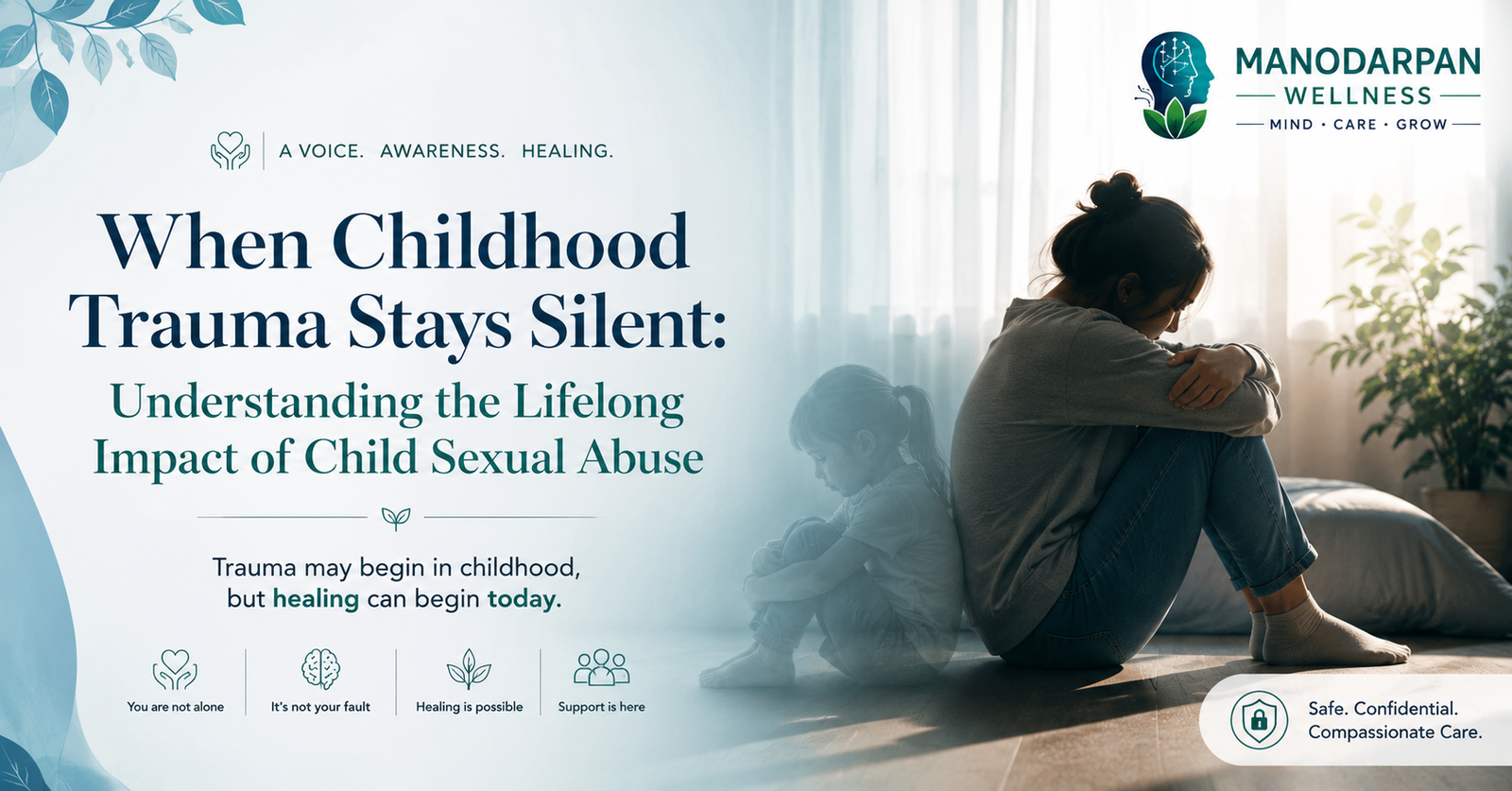
The Hidden Wounds of Childhood Sexual Abuse: How Early Trauma Affects Mental Health for Years
- 06 Aug 2026
- childhood sexual abuse, childhood trauma, mental h...
Some wounds don't leave scars on the body. They stay in the mind.
Childhood should be a time of safety, love, and learning. But for many children, it becomes a time of fear because of sexual abuse or inappropriate touch. The most heartbreaking part is that many children don't even understand what is happening to them. They may not have the words to explain it, or they may be scared, confused, or threatened into staying silent.
This blog is not about blaming any gender. It is about understanding the lifelong impact of childhood sexual abuse and encouraging survivors to seek help. Abuse can happen to girls and boys, and survivors deserve compassion, not judgment.
What Is Childhood Sexual Abuse?
Childhood sexual abuse is any sexual behavior involving a child where the child cannot understand, consent to, or stop what is happening.
It may include:
- Inappropriate touching
- Forcing a child to watch sexual content
- Sexual comments or grooming
- Exploitation or manipulation
- Any sexual act involving a minor
Many survivors were too young to understand what happened. They only realize the impact years later.
Why Children Often Stay Silent
One of the biggest myths is:
"Why didn't they tell someone?"
The truth is, children often remain silent because:
- They don't know it was wrong.
- They are afraid no one will believe them.
- They are threatened by the abuser.
- They feel ashamed or guilty.
- The abuser is someone they know or trust.
Silence is not consent. It is often a survival response.
The Trauma Doesn't End When the Abuse Stops
Even after years have passed, childhood trauma can continue affecting mental health.
Many survivors experience:
Anxiety
Feeling constantly nervous, unsafe, or expecting something bad to happen.
Depression
Persistent sadness, hopelessness, and loss of interest in life.
Low Self-Esteem
Believing they are "broken," "dirty," or somehow responsible for what happened.
Trust Issues
Finding it difficult to trust friends, partners, or even family members.
Relationship Difficulties
Fear of intimacy, emotional distance, or unhealthy relationship patterns.
PTSD (Post-Traumatic Stress Disorder)
Flashbacks, nightmares, panic attacks, or avoiding reminders of the trauma.
Self-Blame
Many survivors wrongly believe they could have prevented the abuse, even though they were children.
Emotional Numbness
Some people stop feeling emotions as a way to protect themselves from overwhelming pain.
The Effects Can Continue Into Adulthood
Many adults who experienced childhood sexual abuse may struggle with:
- Difficulty expressing emotions
- Fear of physical closeness
- Constant guilt or shame
- Sleep problems
- Panic attacks
- Difficulty concentrating
- Social withdrawal
- Problems at work or college
- Substance misuse in some cases
- Ongoing emotional distress
Sometimes people don't connect these struggles to something that happened years ago.
Healing Is Possible
Trauma can change the way the brain responds to stress, but healing is possible with the right support.
Recovery doesn't mean forgetting what happened.
It means learning to live without letting the trauma control your life.
Professional mental health support can help survivors:
- Process painful memories safely.
- Reduce anxiety and fear.
- Build healthy relationships.
- Improve self-confidence.
- Learn healthy coping skills.
- Regain a sense of control over life.
Healing is a journey, and every person's journey looks different.
How Families Can Support Survivors
If someone shares their experience with you:
- Listen without interrupting.
- Believe them.
- Avoid blaming or questioning their actions.
- Let them know they are not alone.
- Encourage professional support when they are ready.
- Respect their pace of healing.
A supportive response can make a lifelong difference.
Let's Break the Silence, Not the Survivor
Childhood sexual abuse is not just a painful memory—it can become emotional baggage carried for years.
Talking about it respectfully helps reduce stigma and encourages more survivors to seek help.
Whether the survivor is a woman or a man, their pain deserves compassion, understanding, and access to mental health care.
No child should have to carry the weight of someone else's actions throughout their life.
When Should You Seek Professional Help?
If you or someone you know experiences any of the following, it may be helpful to speak with a mental health professional:
- Frequent nightmares or flashbacks
- Severe anxiety or panic attacks
- Difficulty trusting others
- Depression lasting for weeks or months
- Emotional numbness
- Feeling overwhelmed by memories from childhood
- Relationship problems linked to past experiences
Seeking help is not a sign of weakness. It is a step toward healing.
Conclusion:
What happened in childhood does not define your worth.
Healing may take time, but recovery is possible. With the right support, many survivors rebuild confidence, develop healthy relationships, and create meaningful lives.
You deserve to feel safe, heard, and supported.