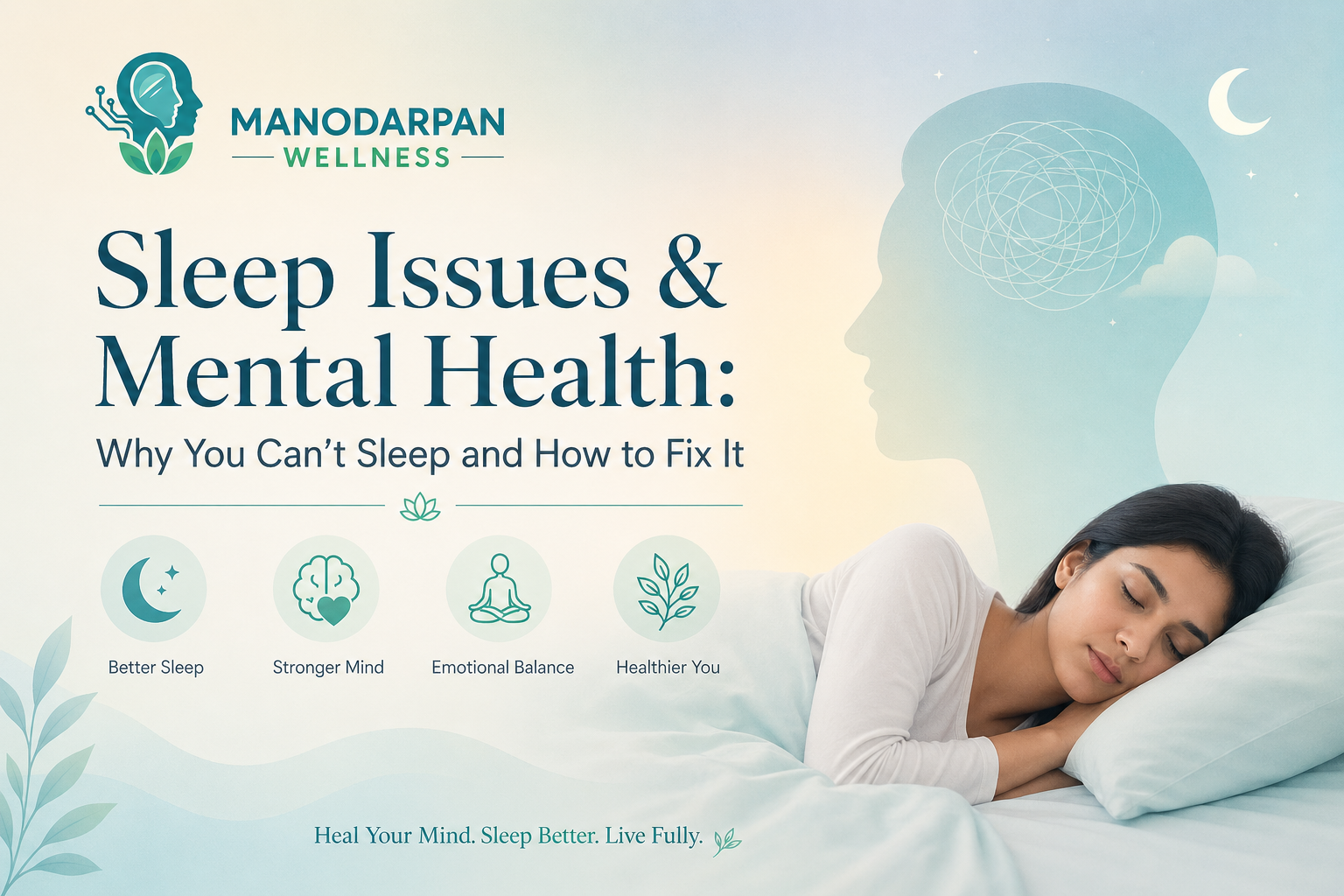
Sleep Issues & Mental Health: Why You Can’t Sleep and How to Fix It
- 21 Apr 2026
- sleep issue, insomnia treatment, mental health &...
Sleep is not just about rest — it is deeply connected to your mental health. Yet, many people today struggle with falling asleep, staying asleep, or waking up feeling refreshed.
If you often find yourself lying awake at night, overthinking, or feeling tired even after 7–8 hours of sleep, your mind might be signaling something deeper.
What Are Sleep Issues?
Sleep issues include:
- Difficulty falling asleep (insomnia)
- Frequent waking during the night
- Waking up too early
- Feeling tired even after adequate sleep
Occasional sleep disturbance is normal, but when it becomes frequent, it can affect both mental and physical health.
How Mental Health Affects Sleep
Your mind and sleep are closely connected. Conditions like stress, anxiety, and depression can disrupt your sleep cycle.
🔹 Stress
Daily stress keeps your brain active, making it harder to relax at night.
🔹 Anxiety
Overthinking and constant worry can delay sleep and cause restless nights.
🔹 Depression
It may lead to either excessive sleeping or severe insomnia.
Signs Your Sleep Problem Is Serious
- Sleep issues lasting more than 2–3 weeks
- Constant fatigue and low energy
- Difficulty focusing during the day
- Mood swings or irritability
- Increased dependence on caffeine or sleeping aids
If you notice these signs, it may be time to seek professional guidance.
Simple Tips to Improve Your Sleep
Maintain a fixed sleep schedule:
Go to bed and wake up at the same time daily, even on weekends.
Limit Screen Time:
Avoid phones and laptops at least 30 minutes before bedtime.
Create a relaxing routine:
Try reading, meditation, or deep breathing before sleep.
Watch your Diet:
Avoid caffeine and heavy meals late in the evening.
Manage Stress:
Journaling, therapy, or mindfulness practices can help calm your mind.
When to Seek Professional Help:
If your sleep issues are persistent and affecting your daily life, professional support can help identify the root cause and provide effective treatment.
At Manodarpan Wellness, expert mental health professionals offer personalized guidance to help you regain healthy sleep and mental balance.
Conclusion:
Sleep is not just about closing your eyes and resting your body — it is a vital process that restores your mind, balances your emotions, and prepares you for the next day. When your sleep is disturbed, it doesn’t just affect your energy levels; it slowly impacts your mood, focus, productivity, and overall mental wellbeing.
Ignoring sleep issues can lead to increased stress, anxiety, irritability, and even long-term mental health concerns. What may start as occasional sleepless nights can gradually turn into a pattern that becomes difficult to break. That is why it is important to listen to your body and take early steps toward improvement.
Building healthy sleep habits, managing daily stress, and creating a calming routine can make a significant difference. However, if your sleep problems continue despite trying these changes, seeking professional support is not a weakness — it is a responsible step towards better health.
At Manodarpan Wellness, the focus is on understanding the root cause of your concerns and providing personalized care to help you restore both your sleep and mental balance.
Remember, better sleep is not just about nights — it is about improving the quality of your entire life. Taking the first step today can lead you toward a calmer mind, healthier routine, and a more fulfilling tomorrow.