AI, Google & Instagram : Should You Trust the Internet With Your Mental Health?
- 21 Aug 2026
- AI and mental health, Google mental health, Instag...
A Gen Z Guide to Finding Reliable Mental Health Information Online
We live in a world where almost every question is just a search away.
Feeling anxious? Google it.
Can't sleep? Check Instagram.
Feeling emotionally overwhelmed? Ask AI.
Want to know whether what you're experiencing is “normal”? Search it.
The internet has made mental health information more accessible than ever. But there is one important question we often forget to ask:
Can everything we find online actually be trusted?
The answer is simple: not always.
Online platforms can help us understand mental health, discover useful resources and even encourage us to seek professional support. But when it comes to diagnosis, treatment or serious emotional concerns, online information should be a starting point—not the final answer.
Why Do We Turn to the Internet for Mental Health Answers?
Talking about mental health can feel difficult.
Sometimes we don't know what we're feeling. Sometimes we are worried about being judged. And sometimes we simply want an answer immediately.
That is where Google, Instagram, YouTube, Instagram and AI chatbots become attractive.
You can search privately, anytime.
A simple search like “Why am I constantly overthinking?” can give you thousands of results within seconds.
The problem is that having access to information doesn't always mean having access to accurate information.
Health misinformation can be false, inaccurate or misleading, and it can make it harder for people to make informed decisions about their health.
Google: Helpful, But Don't Diagnose Yourself
Google can be a great place to learn.
You can use it to understand:
- What anxiety means
- What therapy is
- Different types of mental health professionals
- Common signs of stress
- How sleep can affect your well-being
- Where to find professional support
But there is a difference between learning about symptoms and diagnosing yourself.
For example, you search:
“Why can't I concentrate?”
You may find articles about anxiety, ADHD, depression, sleep problems, stress and several other conditions.
That doesn't mean you have all—or any—of them.
Mental health concerns often overlap, and understanding someone's mental health requires looking at their individual experiences, history, symptoms and circumstances.
Google can give you information. It cannot understand your whole story.
Instagram: Relatable Doesn't Always Mean Accurate
Instagram has changed the way Gen Z talks about mental health.
And that's not necessarily a bad thing.
People are discussing therapy, anxiety, burnout, boundaries, relationships and emotional well-being more openly.
But there is a problem with highly relatable content:
Something can feel exactly like you and still be medically inaccurate.
A creator saying:
“If you do these 5 things, you definitely have anxiety.”
may sound convincing—but a short video cannot replace a proper mental health assessment.
Mental health content can also become oversimplified.
Not every bad day is depression.
Not every distraction is ADHD.
Not every attachment issue means you have a particular attachment style.
Not every relationship problem is “trauma.”
Relatability is not the same as diagnosis.
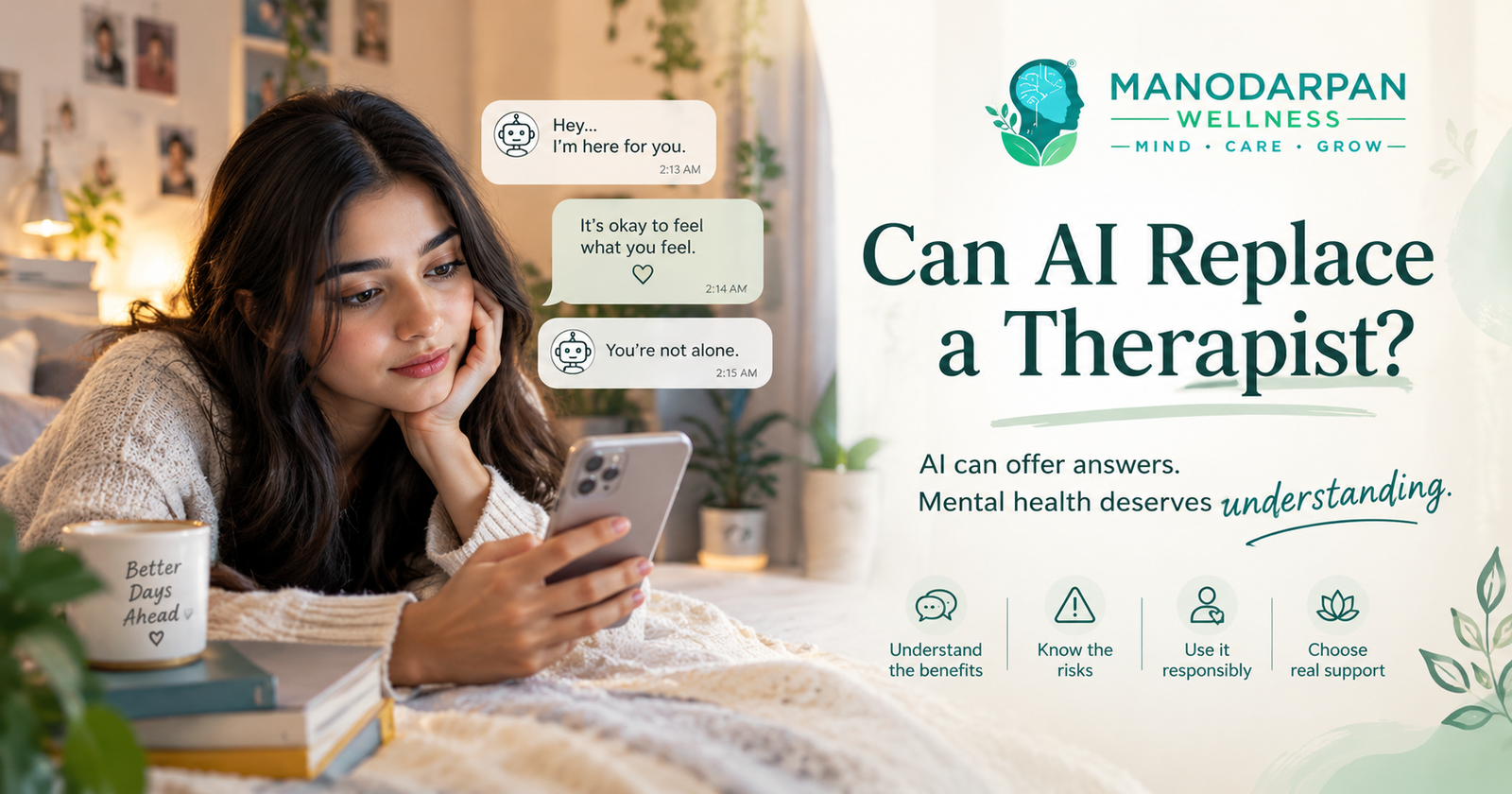
AI: Helpful Assistant or Mental Health Professional?
AI can be incredibly useful.
You can use it to:
- Organize your thoughts
- Learn basic mental health concepts
- Prepare questions before speaking to a professional
- Journal or reflect
- Understand unfamiliar terminology
- Find ways to communicate what you're feeling
But there is an important boundary:
AI should not replace professional mental health care.
The American Psychological Association advises that AI is not a safe or effective replacement for care from a licensed mental health professional and should not be relied upon for diagnosis or treatment.
Why?
Because AI can sound extremely confident—even when its information is incomplete or wrong.
It also doesn't truly understand your life, relationships, body language, history or circumstances in the way a trained professional can assess them.
And sometimes, AI may simply agree with what you are already thinking instead of appropriately challenging or questioning it.
So remember:
AI can help you prepare for a conversation with a professional. It shouldn't become the professional.
The Biggest Problem: Self-Diagnosis
One of the easiest things to do online is to see a list of symptoms and think:
“This sounds exactly like me. I must have it.”
This can create unnecessary fear.
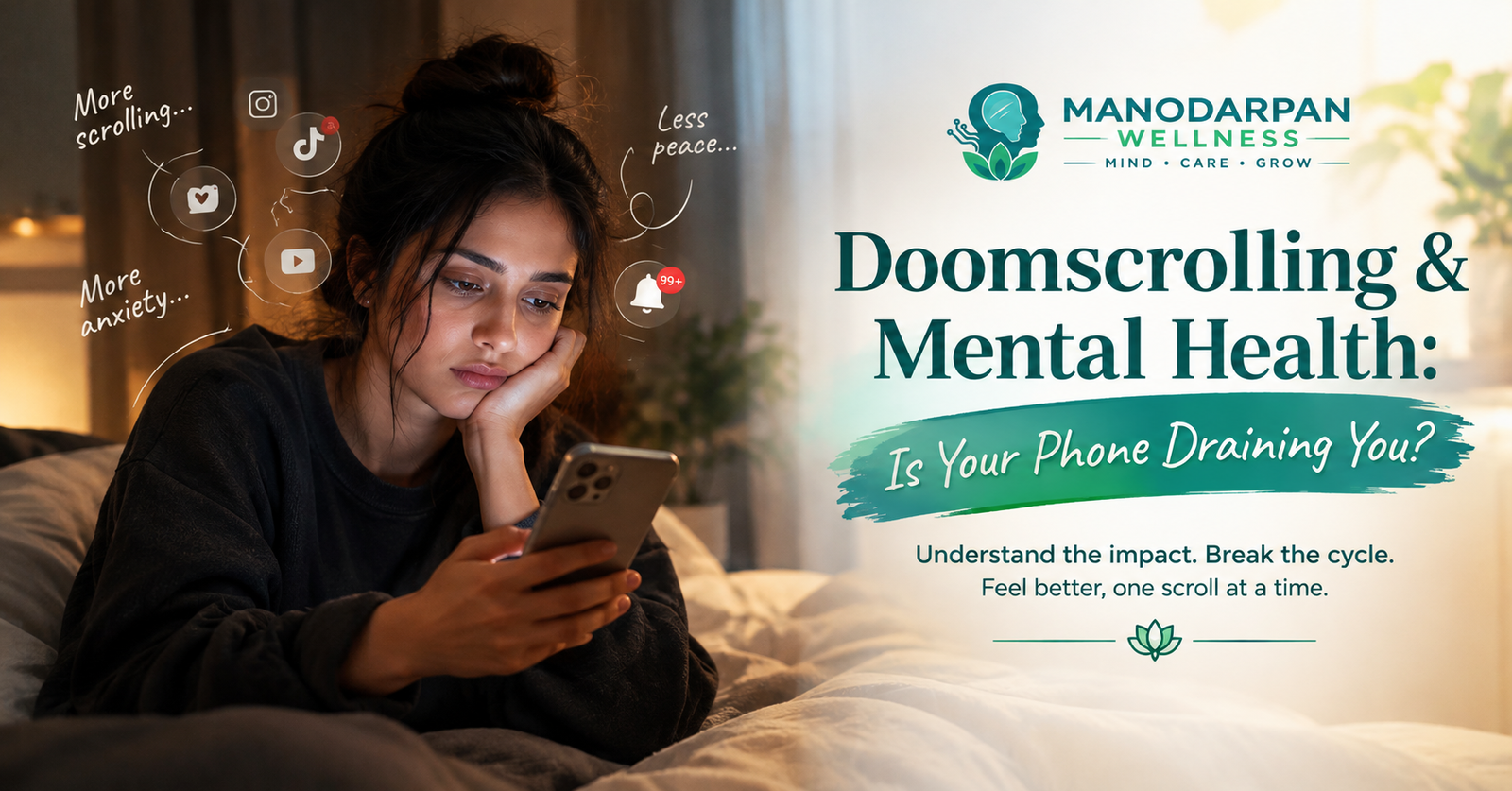
You may start looking for more symptoms, watching more videos and taking more online quizzes.
Then the cycle continues.
Search → relate → worry → search again.
Instead of helping you understand yourself, the internet can sometimes increase confusion and anxiety.
So, How Can You Check If Mental Health Information Is Reliable?
Before believing or sharing mental health content online, ask yourself these questions:
1. Who is giving this information?
Is it a qualified mental health professional, medical organisation, university or trusted health organisation?
Or is it simply a creator sharing a personal experience?
Personal experiences can be valuable—but they aren't automatically medical advice.
2. Is there evidence behind the claim?
Look for information supported by research, recognised health organisations or qualified professionals.
3. Is the content promising a quick diagnosis or cure?
Be careful with statements like:
“This one trick will cure anxiety.”
“If you do this, you definitely have ADHD.”
“Your childhood trauma is causing everything.”
Mental health is rarely that simple.
4. Is the information trying to scare you?
Fear-based content can attract attention and views.
But your mental health shouldn't be treated like clickbait.
5. Does it encourage professional help when needed?
Reliable mental health information should recognise its limitations and encourage appropriate professional support when necessary.
What About Mental Health Quizzes Online?
You've probably seen them:
“Take this 30-second quiz to find out if you're depressed.”
These quizzes can sometimes help you reflect on your feelings, but they should not automatically be treated as a diagnosis.
A proper assessment involves much more than checking boxes on a screen.
If your symptoms are persistent, affecting your relationships, studies, work, sleep or everyday life, consider speaking with a qualified mental health professional.
A Better Way to Use the Internet for Your Mental Health
You don't have to completely avoid Google, Instagram or AI.
Instead, change the way you use them.
Use Google to learn:
Not to diagnose yourself.
Use Instagram to discover conversations:
Not to decide what condition you have.
Use AI to organise your thoughts:
Not to replace therapy.
Use social media to feel less alone:
But don't let it become your only source of emotional support.
And most importantly:
Use qualified professionals for assessment and treatment.
The APA similarly recommends verifying AI-generated mental health information with a healthcare professional and using AI as a supplement rather than a replacement for professional care.
Your feed doesn't know your full story
This may be the most important thing to remember.
The algorithm doesn't know your childhood.
Google doesn't know your relationships.
Instagram doesn't know your complete mental health history.
AI doesn't know everything you've experienced.
But you are more than a symptom list.
Your mental health deserves context, care and an individual understanding of what you're going through.
When Should You Talk to a Professional?
Consider reaching out to a mental health professional when emotional or psychological difficulties are:
- Persisting for a long time
- Affecting your daily routine
- Interfering with studies or work
- Affecting your relationships
- Making it difficult to sleep or function normally
- Becoming increasingly difficult to manage on your own
You don't need to wait until things become unbearable.
Asking for help early is completely okay.
Final Takeaway
The internet has made mental health information easier to access—but accessibility doesn't guarantee accuracy.
Google can help you learn.
Instagram can start conversations.
AI can help you organise your thoughts.
But none of these should automatically become your therapist, diagnosis or treatment plan.
Use the internet for information. Use professionals for care.
And the next time you see a mental health claim online, pause before believing it.
Ask:
“Is this relatable—or is it actually reliable?”
That small question can make a big difference.
A Gentle Reminder from Manodarpan Wellness
You don't have to figure everything out through Google, Instagram or AI.
If something has been troubling you, talking to a qualified mental health professional can help you understand what you're experiencing in a more personal and meaningful way.
Your mental health deserves more than an algorithm.
It deserves understanding, care and professional support.
Manodarpan Wellness — Mind. Care. Grow.