Why Social Media Is Affecting Your Mental Health More Than You Think
- 27 May 2026
- social media and mental health, social media anxie...
Social media has become a major part of everyday life. From the moment we wake up to the last few minutes before sleep, many of us spend hours scrolling through Instagram, watching videos, checking updates, or comparing our lives with others online.
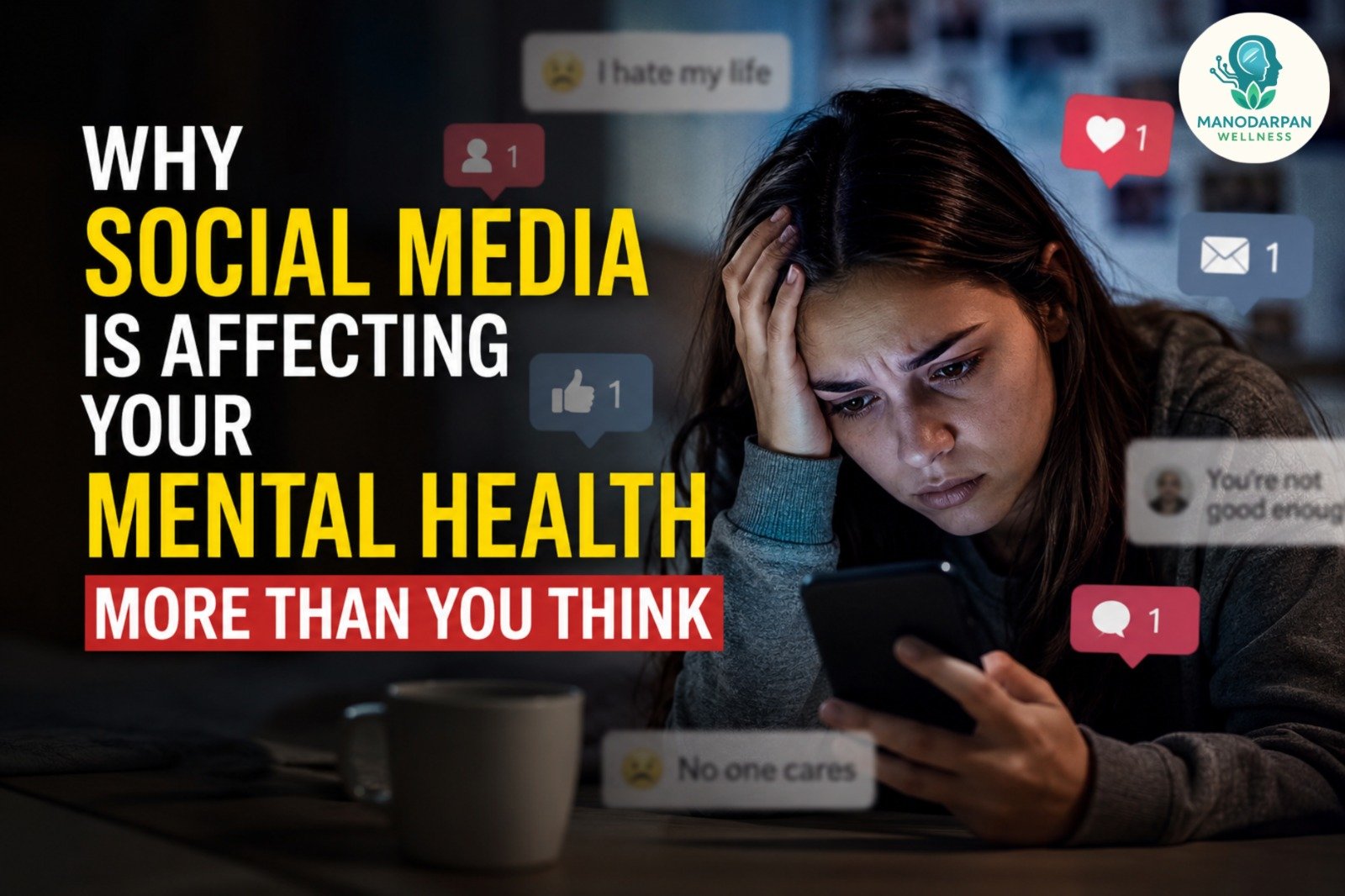
While social media helps people stay connected and entertained, excessive use can also quietly affect mental health. Constant comparison, information overload, unrealistic expectations, and the pressure to always stay active online can leave people feeling emotionally drained without fully realizing why.
Today, more individuals are experiencing stress, anxiety, low self-esteem, and emotional exhaustion linked to their digital habits.
How Social Media Affects Mental Health:
Constant Comparison:
Social media often shows only the “best parts” of people’s lives. Seeing carefully edited photos, achievements, lifestyles, and relationships can create unrealistic expectations and self-doubt.
People may begin to feel:
- “I’m behind in life”
- “Everyone else seems happier”
- “Why is my life not like this?”
Over time, this comparison can negatively affect confidence and emotional wellbeing.
Mental Overload:
Endless scrolling means the brain is constantly consuming information. News updates, opinions, trends, and notifications keep the mind active for long periods without proper mental rest.
This mental overload can lead to:
- Difficulty focusing
- Increased stress
- Emotional fatigue
- Feeling mentally exhausted
Sleep Disturbance:
Many people use social media late at night, which affects sleep quality. The mind remains overstimulated, making it harder to relax and fall asleep.
Poor sleep can then contribute to:
- Low energy
- Mood swings
- Irritability
- Anxiety and stress
Fear of Missing Out (FOMO):
Seeing others constantly socializing, traveling, or achieving goals can create pressure to always stay updated or productive. This often increases feelings of anxiety and dissatisfaction.
Signs Social Media May Be Affecting Your Mental Health
- Feeling anxious after scrolling
- Constantly comparing yourself to others
- Difficulty staying away from your phone
- Feeling emotionally drained after using social media
- Low self-esteem or self-doubt
- Sleep problems caused by screen time
- Reduced focus and productivity
If these patterns become regular, it may be a sign that your digital habits are affecting your mental wellbeing.
Healthy Ways to Build a Better Relationship with Social Media:
Set Screen Time Limits:
Taking regular breaks from social media helps reduce mental fatigue.
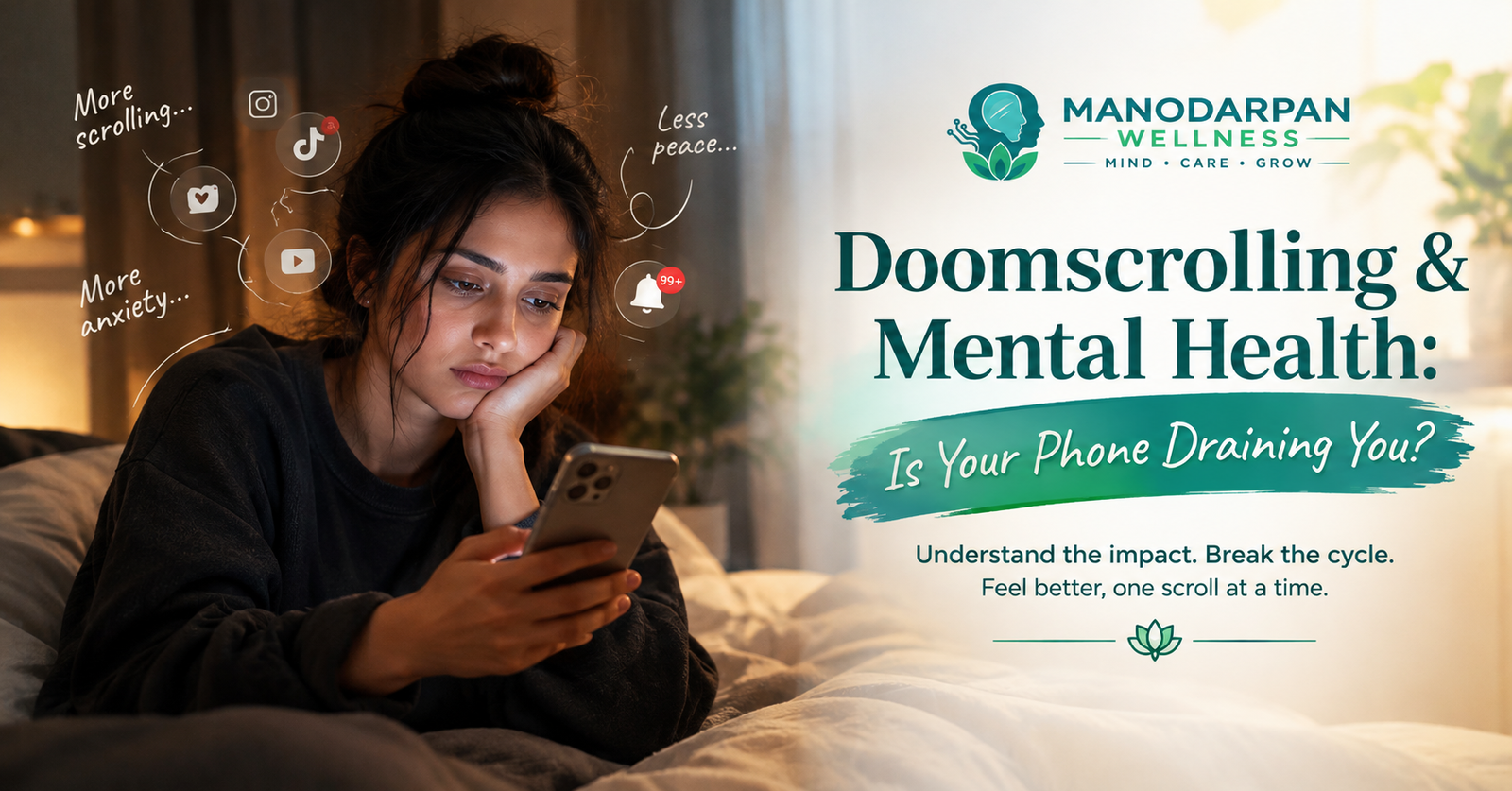
Avoid Doom Scrolling:
Constantly consuming negative or overwhelming content can increase stress and anxiety.
Follow Positive and Realistic Content:
Choose content that inspires, educates, and supports emotional wellbeing instead of creating pressure.
Create Offline Time:
Spending time with family, hobbies, exercise, or nature can help the mind relax and reconnect with real-life experiences.
Prioritize Sleep:
Reducing screen use before bedtime can improve both sleep and emotional balance.
Pay Attention to Your Mental State:
If social media constantly leaves you feeling stressed, anxious, or emotionally low, it is important to acknowledge those feelings rather than ignore them.
Mental Health Support Matters:
Taking care of mental health in the digital age is more important than ever. While social media itself is not always harmful, unhealthy usage patterns can slowly affect emotional wellbeing.
At Manodarpan Wellness, individuals can connect with experienced professionals through online consultations to better understand stress, anxiety, emotional exhaustion, and other mental health concerns in a safe and supportive environment.
Conclusion:
Social media has become deeply connected to modern life, but it is important to remember that mental wellbeing matters more than online validation. Constant comparison, mental overload, and digital pressure can quietly affect emotions, confidence, sleep, and overall peace of mind.
Creating healthy boundaries with technology, taking breaks when needed, and focusing on real-life wellbeing can help build a healthier relationship with social media. Most importantly, it is okay to step back and prioritize your mental health over constant online activity.
Sometimes, even small changes in digital habits can make a meaningful difference in how calm, balanced, and emotionally healthy you feel.