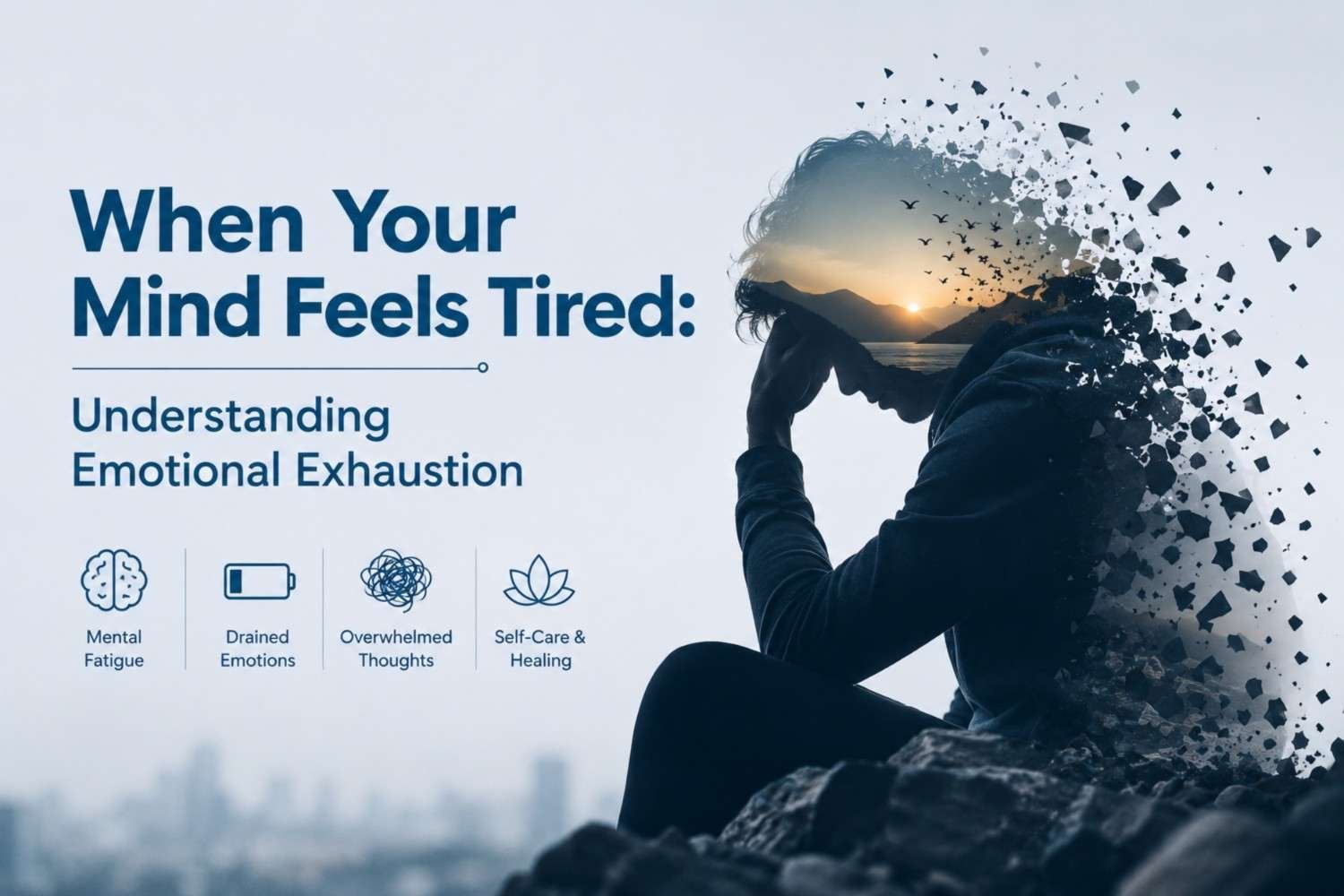
When Your Mind Feels Tired: Understanding Emotional Exhaustion
- 21 May 2026
- emotional exhaustion, mental fatigue, emotional we...
Sometimes, the body is not the thing that feels tired — the mind is.
You wake up after a full night’s sleep but still feel drained. Small tasks begin to feel overwhelming. Conversations feel exhausting. Even replying to messages can seem like too much effort.
Many people experience this without realizing that it could be emotional exhaustion. In a world where being “busy” is often seen as normal, mental fatigue is frequently ignored until it starts affecting daily life.
Emotional exhaustion does not always appear dramatically. Sometimes, it quietly builds over time through stress, pressure, overthinking, and constantly carrying more than your mind can process.
What Is Emotional Exhaustion?
motional exhaustion is a state where a person feels mentally and emotionally drained due to prolonged stress or emotional pressure.
It can happen because of:
- Work or academic pressure
- Constant overthinking
- Relationship stress
- Lack of rest
- Emotional responsibilities
- Trying to “stay strong” all the time
Over time, the mind becomes overloaded, making it harder to focus, stay motivated, or feel emotionally balanced.
Common Signs of Emotional Exhaustion:
Emotional exhaustion looks different for everyone, but some common signs include:
- Feeling tired all the time
- Lack of motivation
- Difficulty concentrating
- Increased irritability
- Overthinking small situations
- Feeling emotionally numb
- Trouble sleeping or resting properly
- Wanting to avoid people or responsibilities
Many people dismiss these feelings as “just stress,” but when they continue for a long time, they can begin to affect mental wellbeing more deeply.
Why It Is Important to Pay Attention:
Ignoring emotional exhaustion can slowly impact every area of life — relationships, productivity, confidence, sleep, and even physical health.
The mind is not designed to stay under constant pressure without rest. Just like the body needs recovery after physical effort, the mind also needs care, space, and support.
Often, people wait until they completely burn out before acknowledging that something feels wrong. Recognizing emotional exhaustion early can help prevent deeper mental health struggles later.
Simple Ways to Support Your Mental Wellbeing:
Take mental breaks seriously:
Rest is not laziness. Giving yourself time to pause can help reduce emotional overload.
Stop normalizing Constant stress:
Being constantly stressed should not become a lifestyle.
Create boundaries:
It is okay to say no to things that overwhelm you emotionally.
Reduce mental noise:
Too much screen time, comparison, and overstimulation can increase mental fatigue.
Talk about what you feel:
Keeping everything inside often makes emotional pressure heavier.
Seek professional Guidance when needed:
Sometimes, talking to a professional can help you understand your thoughts and emotions more clearly.
You Don’t Have to Handle Everything Alone
Many people believe they need to manage every emotional struggle by themselves. But seeking support is not weakness — it is self-awareness.
At Manodarpan Wellness, individuals can connect with experienced professionals through online consultations in a safe and supportive environment. Sometimes, even one conversation can help you feel lighter, calmer, and more understood.
Conclusion:
Emotional exhaustion is real, and it deserves attention just like physical tiredness does. Constant stress, emotional pressure, and overthinking can slowly affect the way a person thinks, feels, and experiences everyday life.
The important thing to remember is that you do not have to wait until things become overwhelming to take care of your mental health. Small steps like resting, setting boundaries, expressing emotions, and seeking support can make a meaningful difference over time.
Life can feel heavy sometimes, but carrying everything alone should not become a habit. Taking care of your emotional wellbeing is not selfish — it is necessary. And asking for help when your mind feels tired may be one of the healthiest decisions you make for yourself.