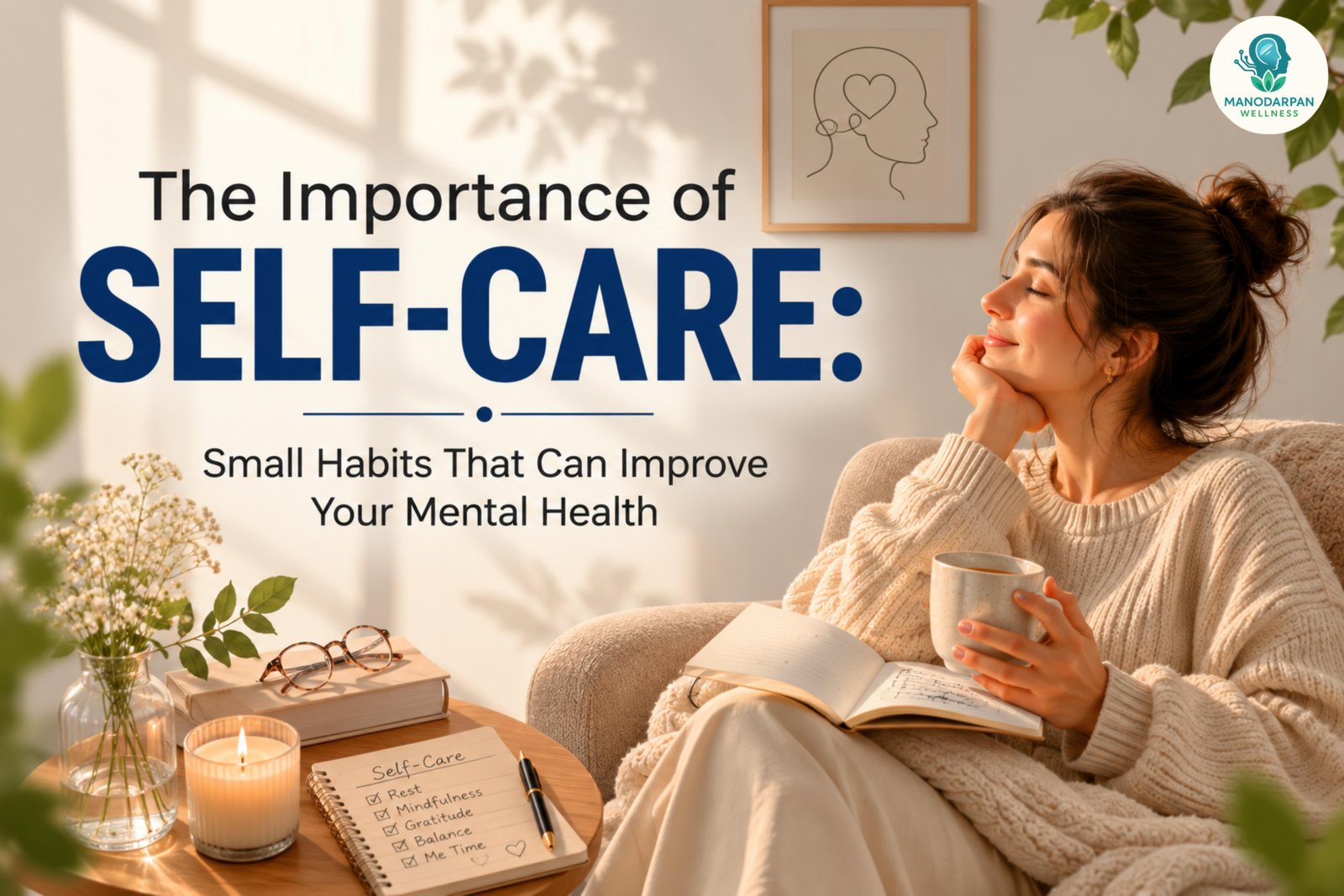
The Importance of Self-Care: Small Habits That Can Improve Your Mental Health
- 19 Jun 2026
- self-care, self-care for mental health, mental hea...
When people hear the term self-care, they often imagine vacations, spa days, or expensive wellness routines. But true self-care is much simpler—and much more important than that.
Self-care is about making small, intentional choices that support your physical, emotional, and mental wellbeing. It's about taking care of yourself in the same way you would care for someone you love.
In today's fast-paced world, where people are constantly juggling work, studies, family responsibilities, and social expectations, self-care is no longer a luxury. It has become a necessity for maintaining good mental health.
What Is Self-Care?
Self-care refers to the daily habits and activities that help maintain your overall wellbeing. It means paying attention to your emotional, physical, and psychological needs instead of constantly putting yourself last.
Self-care doesn't have to be complicated. Sometimes it's as simple as:
- Getting enough sleep
- Eating nutritious meals
- Taking breaks during the day
- Going for a walk
- Spending time with loved ones
- Saying "no" when you're overwhelmed
- Talking about your feelings
The goal isn't perfection—it's consistency.
Why Self-Care Matters for Mental Health:
Ignoring your own needs for too long can lead to emotional exhaustion, stress, anxiety, and burnout.
Practicing self-care regularly helps you:
Reduce Stress:
Giving yourself time to rest allows your mind and body to recover from daily pressures.
Improve Emotional Balance:
Healthy routines help regulate emotions and improve resilience during difficult times.
Increase Productivity:
A well-rested mind performs better than an exhausted one.
Build Self-Confidence:
Prioritizing your wellbeing sends an important message to yourself—you matter too.
Strengthen Relationships:
When you're emotionally healthy, you're better able to support and connect with others.
Signs You're Neglecting Self-Care:
Many people don't realize they're running on empty until their mental health begins to suffer.
Some common signs include:
- Feeling tired all the time
- Constant irritability
- Difficulty concentrating
- Lack of motivation
- Trouble sleeping
- Feeling emotionally overwhelmed
- Losing interest in activities you once enjoyed
- Frequently saying, "I don't have time for myself."
These are often signs that your mind is asking for care.
Simple Self-Care Habits You Can Start Today:
Begin Your Day Without Your Phone:
Instead of immediately checking social media, spend the first few minutes stretching, breathing, or simply enjoying a quiet morning.
Move Your Body:
You don't need an intense workout.
A 20–30 minute walk can help reduce stress and improve your mood.
Make Time for Yourself:
Read a book, listen to music, journal your thoughts, or simply sit quietly for a few minutes each day.
Prioritize Quality Sleep:
Good sleep is one of the strongest foundations of good mental health.
Take Digital Breaks:
Constant notifications and endless scrolling can overwhelm your mind.
Creating screen-free moments during the day can help you feel calmer and more present.
Talk to Someone You Trust:
Sharing your thoughts with a friend, family member, or mental health professional can reduce emotional burden.
Self-Care Is Not Selfish:
Many people feel guilty when they prioritize themselves.
But taking care of your mental health doesn't mean you're ignoring others—it means you're making sure you have the emotional energy to show up for both yourself and the people you care about.
You cannot pour from an empty cup.
Choosing rest, setting boundaries, and asking for help are all healthy acts of self-care.
Conclusion:
Self-care isn't about doing something extraordinary once in a while—it's about building small habits that support your wellbeing every day.
Even a few minutes of intentional rest, movement, reflection, or connection can have a meaningful impact on your mental health over time.
Remember, your mind deserves the same care and attention as your body. Prioritizing yourself isn't selfish—it's one of the healthiest decisions you can make.
Small habits practiced consistently can create lasting changes in how you feel, think, and live.


